
Industrial vs Consumer Dehumidifier: What Actually Works
Industrial vs consumer dehumidifier: understand the capacity gap, drying timelines, and when each unit type is the right choice after water damage.
Why Equipment Class Changes the Outcome
When water gets into a home, the clock starts immediately. Moisture moves into wall cavities, subfloor material, and insulation within hours. What happens in the first 24 to 48 hours determines whether a homeowner faces a drying job or a mold remediation job. The difference between those two outcomes often comes down to one factor: the dehumidifier running in the space.
A consumer unit from the hardware store is built for maintenance humidity control. It keeps a finished basement comfortable during humid Arkansas summers. It is not engineered for emergency structural drying. An industrial dehumidifier is a different tool entirely. It moves air through a refrigerant coil at high velocity, pulls moisture out of porous materials like drywall and wood framing, and exhausts dry air back into the space to repeat the cycle continuously. For complete coverage of how drying and dehumidification work together in a water event, see our Industrial Dehumidifiers Rental: What You Need to Know resource.
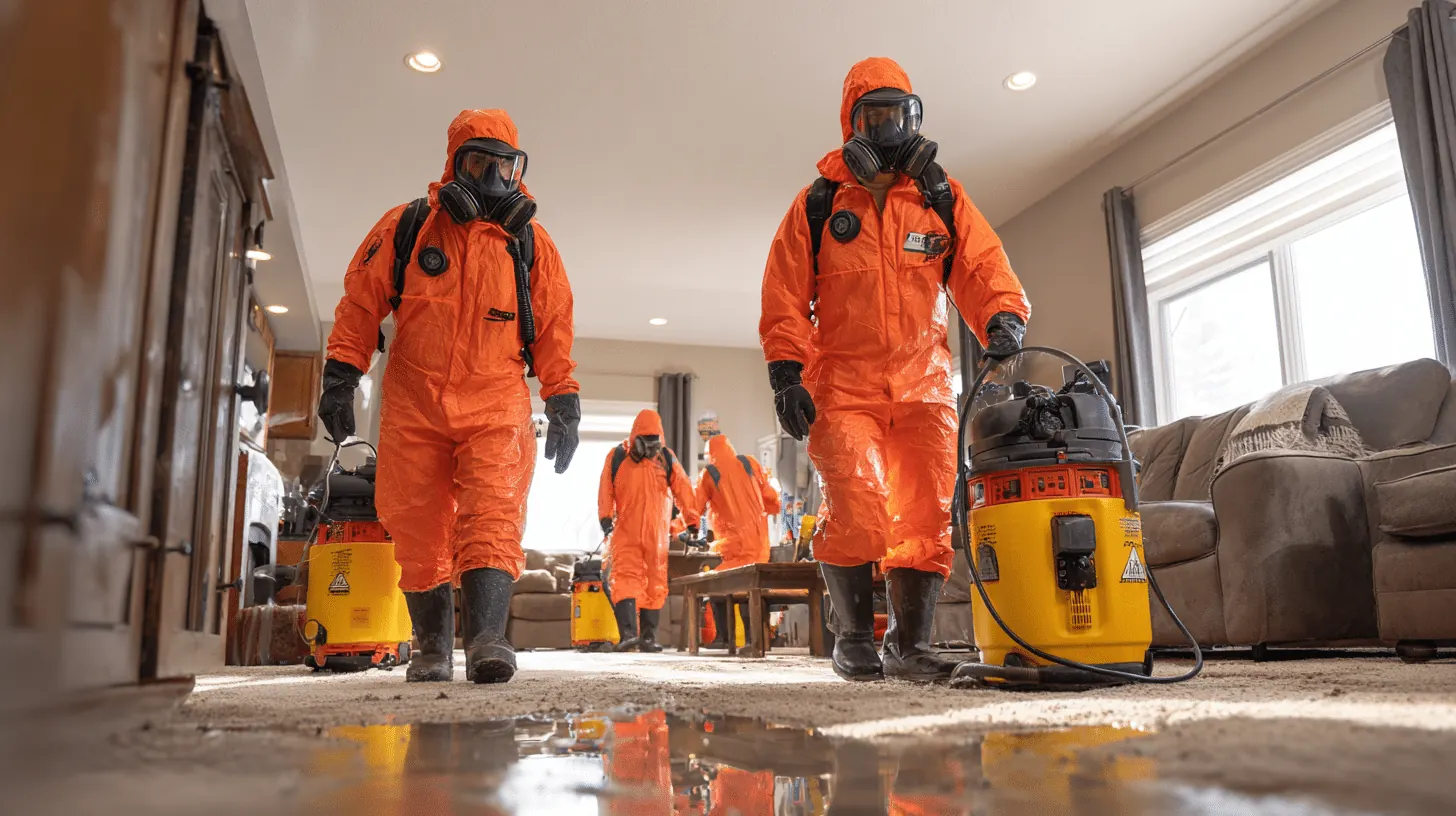
Bear uses commercial-grade drying equipment on every moisture job in Northwest Arkansas because the alternative is asking homeowners to wait longer, spend more on secondary damage, and risk a mold problem on top of the original event.
How the Numbers Actually Compare
Capacity numbers are where most homeowners get confused. Retail packaging uses pints per day as the primary spec, but that number is measured under laboratory conditions at 80 degrees Fahrenheit and 60 percent relative humidity. In a real moisture event, conditions are often cooler and the relative humidity drops as drying progresses. Consumer units lose significant efficiency as humidity falls below 50 percent. Many stop extracting meaningful moisture below 40 percent RH.
What does pints-per-day actually mean in a real job?
A 50-pint consumer unit running at peak efficiency in ideal conditions will pull roughly 6 pints per hour. In a cooler crawl space or after humidity drops, that number falls to 2 or 3 pints per hour. An industrial low-grain refrigerant unit rated at 200 pints per day maintains high extraction rates even when conditions are challenging. On a moderately sized water loss in a 1,500 square foot home, a professional crew might deploy two or three industrial units simultaneously to hit the drying targets set by industry standards for structural drying after flooding.
How does airflow factor in?
Dehumidification alone does not dry a structure. Air movement is what pulls moisture out of materials and into the air where the dehumidifier can capture it. Industrial air movers run at 1,500 to 3,000 CFM (cubic feet per minute). A standard box fan produces a fraction of that. Professional drying systems pair high-velocity air movers with industrial dehumidifiers in a calculated ratio based on the square footage and material types affected. According to IICRC drying standards, the number and placement of drying equipment should follow a structured protocol, not a best-guess approach. Consumer equipment does not fit into that protocol in any meaningful way after a significant water loss.
When a Consumer Unit Is the Right Tool
Consumer dehumidifiers are not useless. They solve the problem they were built for. A homeowner in Bentonville with a finished basement that runs at 65 to 70 percent relative humidity during July and August needs a maintenance dehumidifier. A unit with a built-in pump, a 50-pint capacity, and an auto-restart feature after a power outage does that job well. Running it continuously from May through September keeps humidity at a comfortable 45 to 50 percent, discourages dust mites, and protects stored belongings.
What are the right use cases for consumer-grade units?
Seasonal humidity control in finished basements, crawl spaces with existing vapor barriers that need supplemental moisture management, and RV or storage unit humidity maintenance are all appropriate applications. These are steady-state moisture situations, not active drying events. The moisture load is relatively stable and predictable. A properly sized consumer unit handles it without issue.
Can a consumer unit prevent mold after a small leak?
Even a small leak, like a slow drip behind a vanity or a minor supply line failure, can saturate drywall and cabinet material before the homeowner notices. By the time the source is found and repaired, the adjacent materials may already be holding moisture at levels a consumer unit cannot correct quickly enough. If a surface dries to the touch but the wall cavity behind it remains wet, mold can establish itself without any visible sign. Professional moisture readings with a pin-type or non-invasive meter are the only way to confirm a space is actually dry. For jobs that started as a minor issue and grew, proper water damage drying and dehumidification protocol is still the correct approach.
Industrial Dehumidifier Rental Versus Buying Consumer Units
Some homeowners consider buying a consumer unit and running it continuously after a water event to avoid rental costs. On paper, the math seems reasonable. A 70-pint unit costs $300 to $400 retail. Renting professional equipment through a restoration company costs more per day. But the math changes when you account for drying time and secondary damage costs.
What does a longer drying timeline actually cost?
Every additional day a structure remains wet above safe moisture thresholds increases the risk of mold colonization, material degradation, and structural swelling. Hardwood floors that dry within 3 to 4 days under industrial drying conditions may be salvageable. The same floors held at elevated moisture for 7 to 10 days under inadequate drying equipment may need full replacement. The cost difference between floor drying and floor replacement is significant. Extending drying time to save on equipment rental is a false economy in most structural drying scenarios, and understanding the full water damage restoration cost in Northwest Arkansas makes clear why the right equipment class from day one is the better investment.
Who manages the equipment during the rental period?
When a restoration company handles the drying, a technician monitors moisture readings daily, adjusts equipment placement as conditions change, and documents the drying log for insurance purposes. A homeowner running rented consumer equipment independently has no moisture monitoring protocol, no drying log, and no professional judgment guiding the process. Most property insurance carriers require documented drying evidence for structural drying claims. A consumer unit running in a corner without moisture tracking rarely satisfies that documentation requirement. Using professional moisture monitoring during water damage restoration is what produces the documentation insurers expect.
Moisture Events in Northwest Arkansas Homes
Northwest Arkansas sees a range of moisture events throughout the year. Spring storms produce flooding in low-lying areas of Rogers and Centerton. Aging supply lines in older Bella Vista homes fail without warning. Humid summers push crawl space moisture to levels that support mold growth even without a visible water event. The climate here is not dry. Homes in this region carry a baseline humidity challenge that makes proper moisture management more than a one-time concern.
How does regional humidity affect drying timelines?
During July and August, outdoor relative humidity in Northwest Arkansas regularly exceeds 80 percent. Running industrial dehumidifiers in a structure with open doors and windows during that period counteracts the drying process. Professional crews close the structure, condition the air internally, and prevent outdoor humidity from loading back into the space. Consumer units operating in unconditioned air during a humid Arkansas summer are working against themselves. Proper setup and containment are part of the professional drying process that a consumer unit rental cannot replicate. For events involving contaminated water, like a sewer backup, the moisture problem is only one part of the job. Proper sewage cleanup and biohazard restoration requires both contamination control and structural drying handled together.
When should a homeowner call a restoration company versus handle it themselves?
Any water event that affects more than a small surface area, any event involving Category 2 or Category 3 water (gray water or sewage), and any event where the water source was active for more than a few hours warrants professional assessment. According to FEMA flood recovery guidance, prompt professional drying reduces long-term structural damage and lowers total recovery costs. The flood damage cleanup process is not a DIY task when structural materials are involved.
What Professional Drying Looks Like on an Actual Job
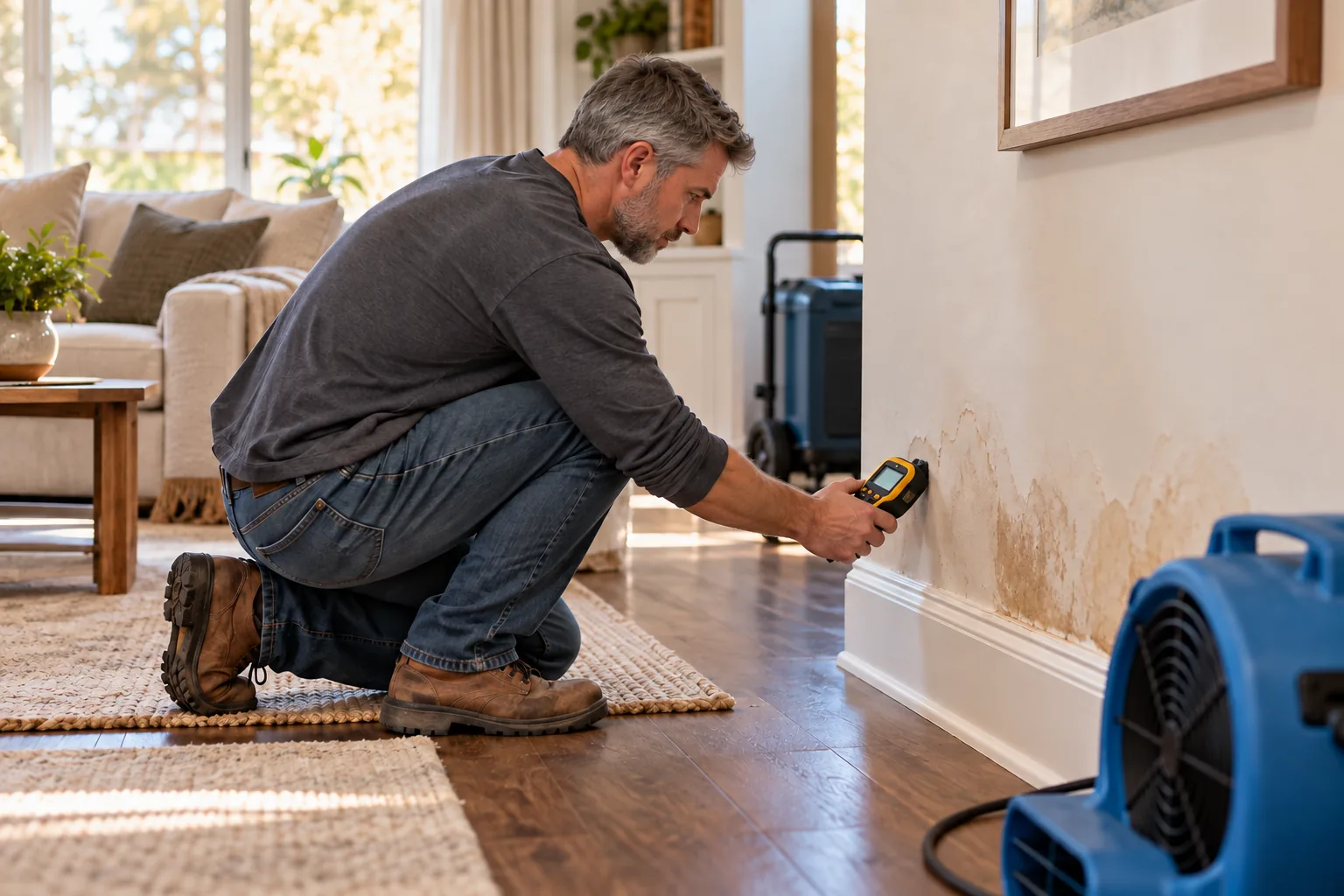
When Bear responds to a water loss in Bentonville or Rogers, the first step is moisture mapping. Technicians use thermal imaging and moisture detection tools to locate moisture in materials that look dry on the surface. That data establishes a baseline. Equipment is then placed according to the square footage, material types, and moisture levels present, not a general rule of thumb.
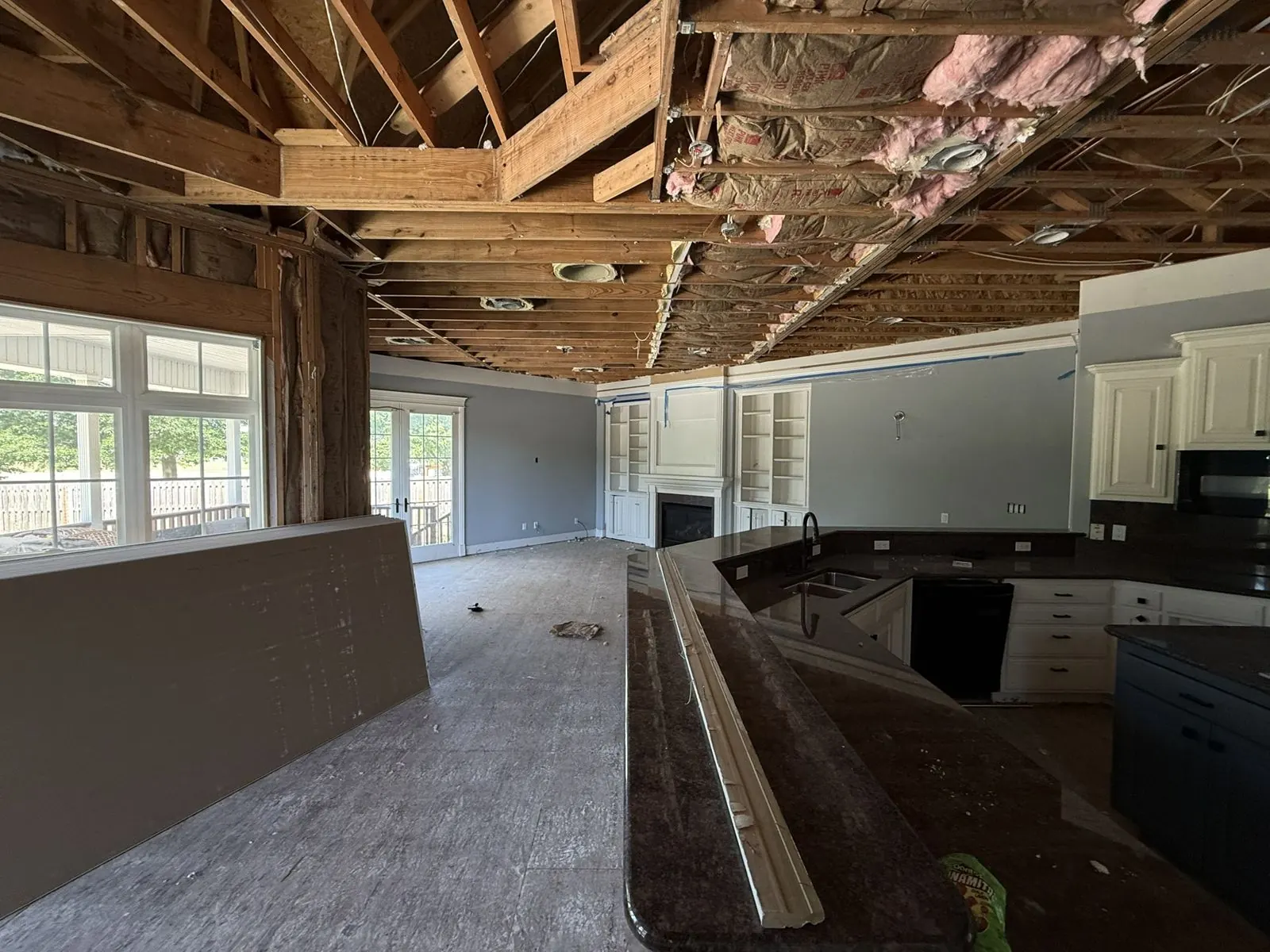
Daily checks track whether moisture readings are trending down at the expected rate. If a wall cavity is not drying adequately, techniques like flood cuts or injection drying may be used to access the moisture directly. The drying log documents every reading at every location for every day of the job. That documentation supports the insurance claim and confirms the structure was returned to a pre-loss moisture condition before any reconstruction begins. Related home reconstruction after water damage cannot proceed responsibly until drying is confirmed complete.
Frequently Asked Questions
Can I use a consumer dehumidifier after a pipe bursts in my home?
A consumer unit will not dry a structure aft
Bear’s water damage services.
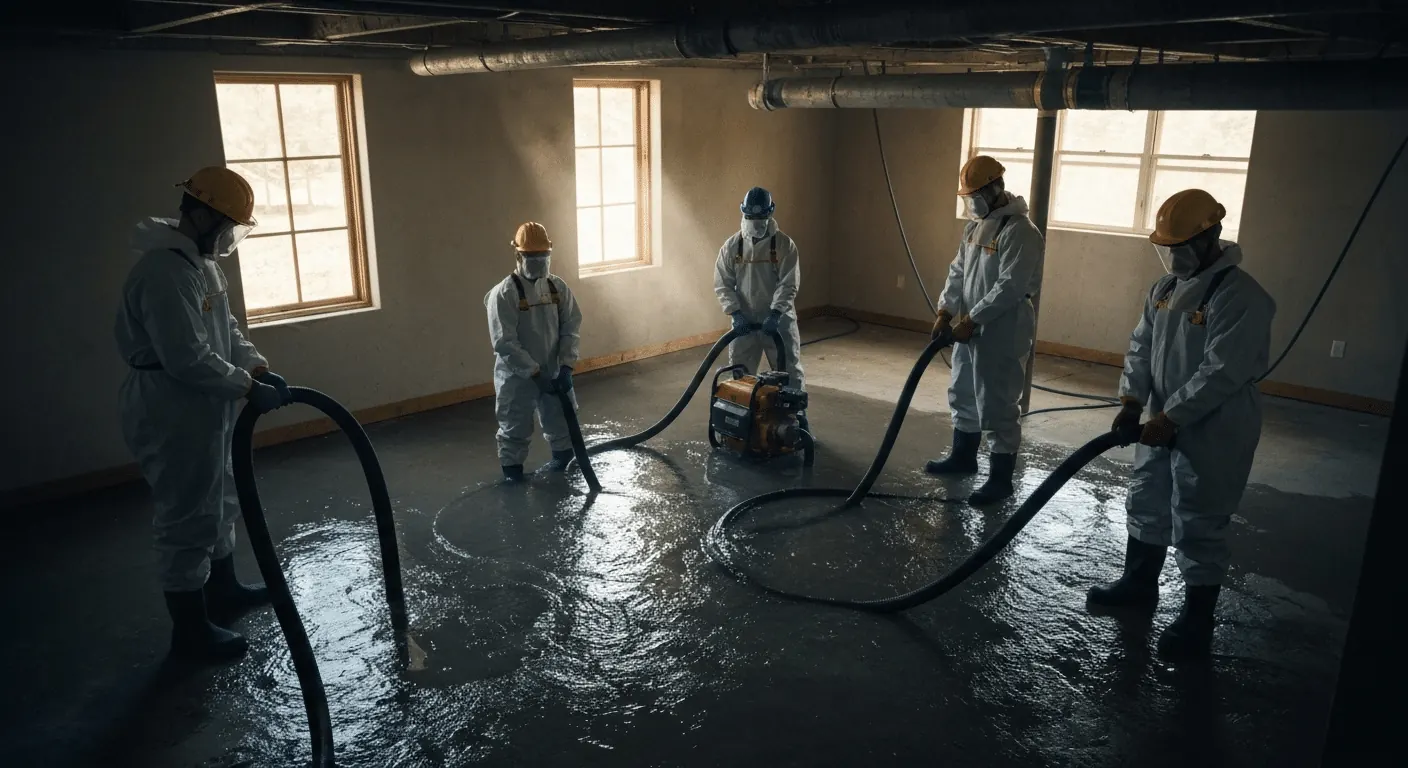
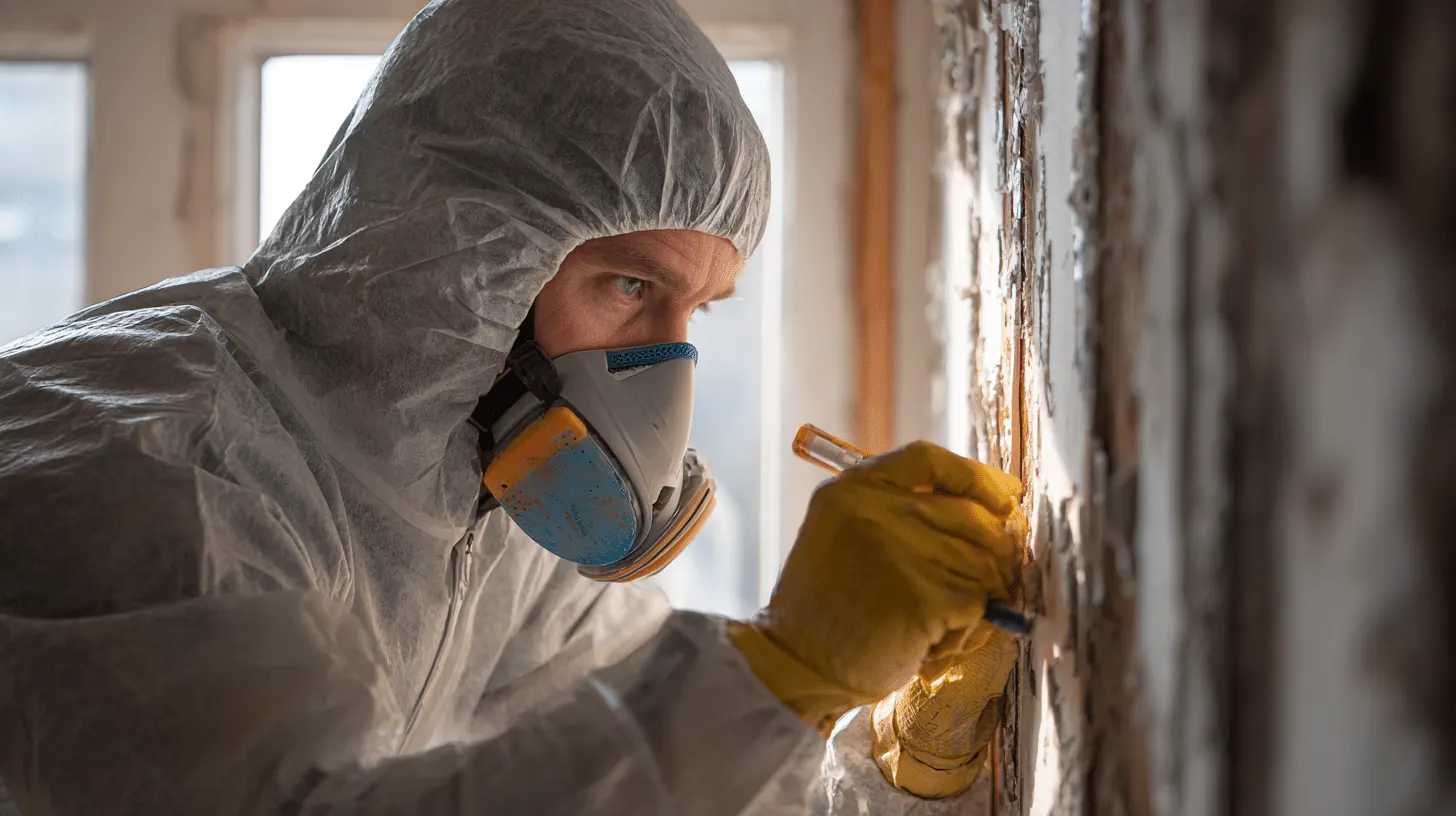 Water RemovalCommercial-duty pumps and vacuums extract water fast to limit the damage.
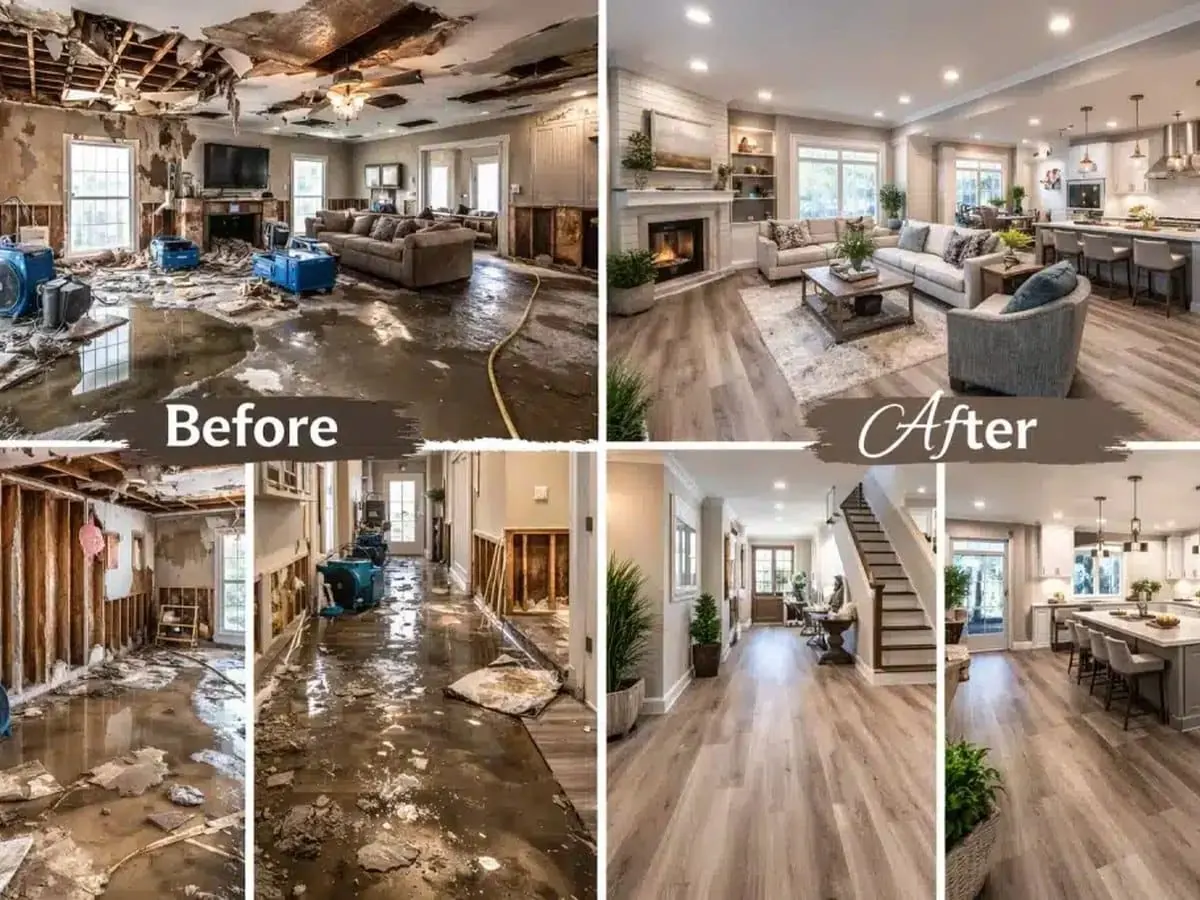 Structural DryingAir movers, dehumidifiers and moisture meters pull water out of framing, subfloor and drywall.
 Water Damage RepairsExpert assessment, thorough restoration and full documentation.
 Flood Damage CleanupDebris removal, drying and disinfection after a flood.
 Sewage CleanupSanitization, decontamination and structural restoration.After Water DamageWhat to do in the first hour: shut-offs, photos and when to call.