 Contact Bear →
Dry to the studs, not just the surface.
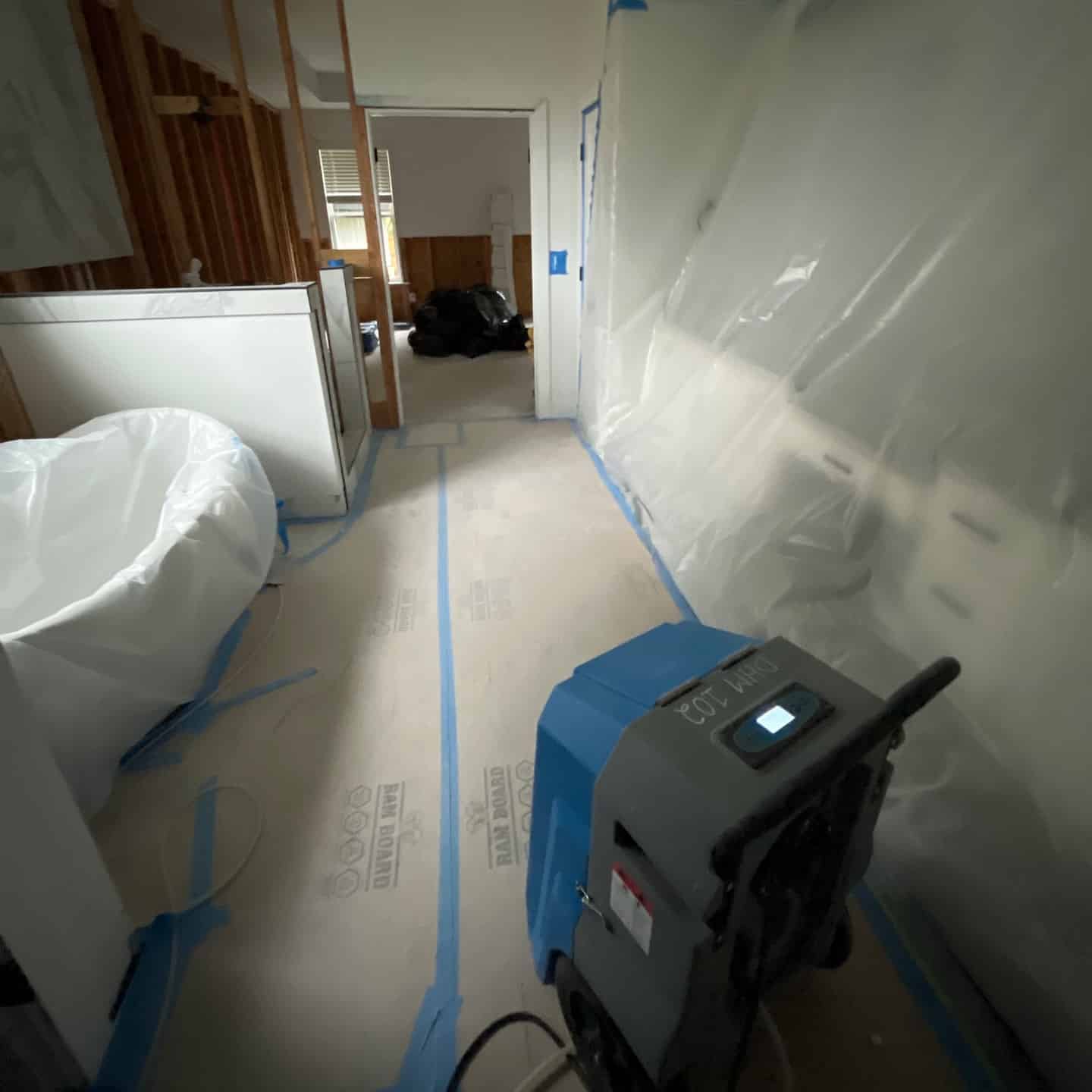
Air movers, commercial dehumidifiers and daily moisture readings pull water out of framing, subfloor and drywall, so the repair starts on dry material and the mold never gets its chance.
A floor that feels dry usually isn’t.
Wood, drywall and insulation hold water long after the surface is dry to the touch.
Trapped moisture is what turns a water loss into a mold and rot problem weeks later.
Bear sets a drying plan on day one: equipment placement, target moisture levels for each material and daily readings until every one of them hits its target. Nothing gets closed up wet.
The structural drying process.
- 01
Moisture mapping
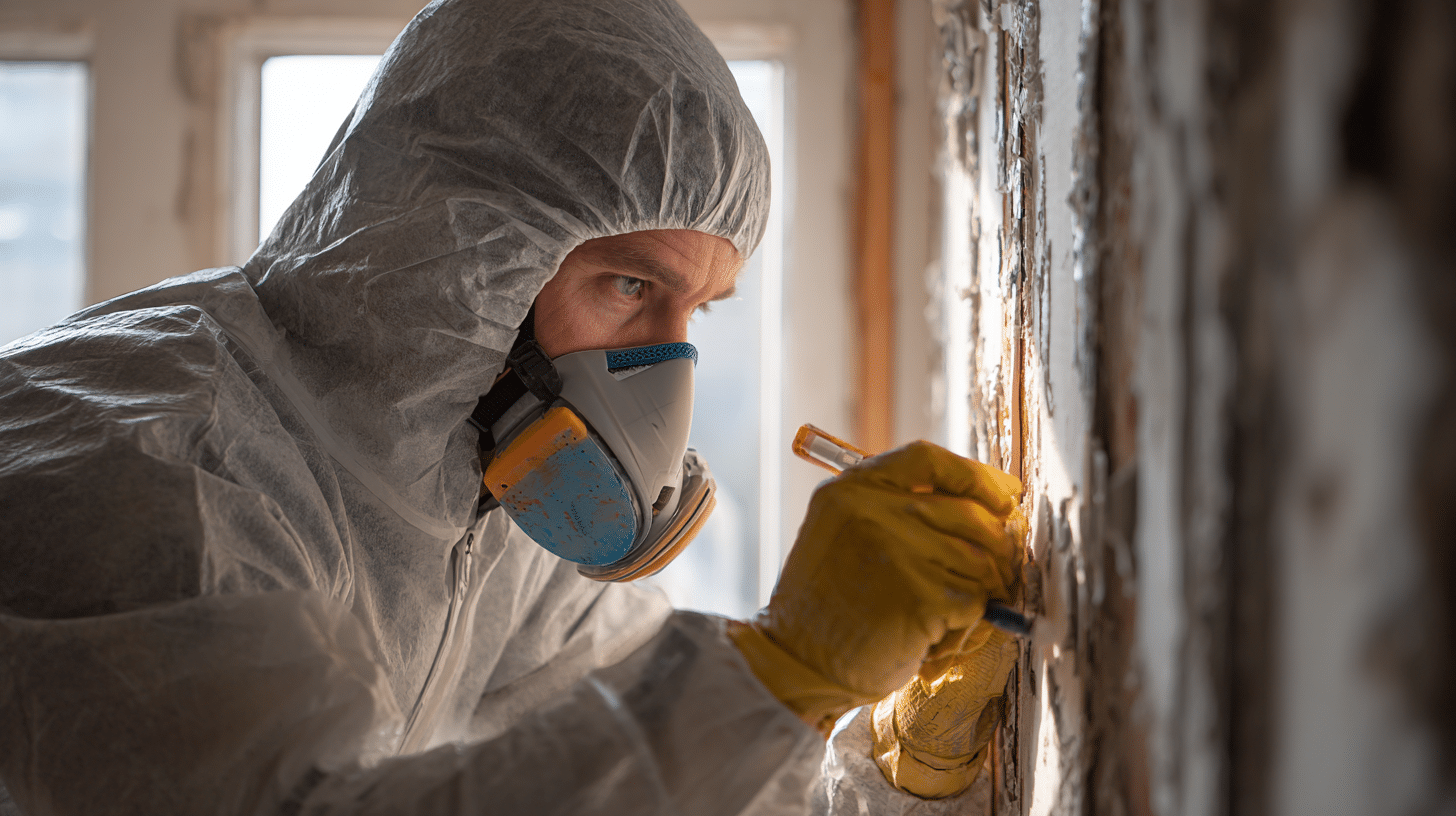
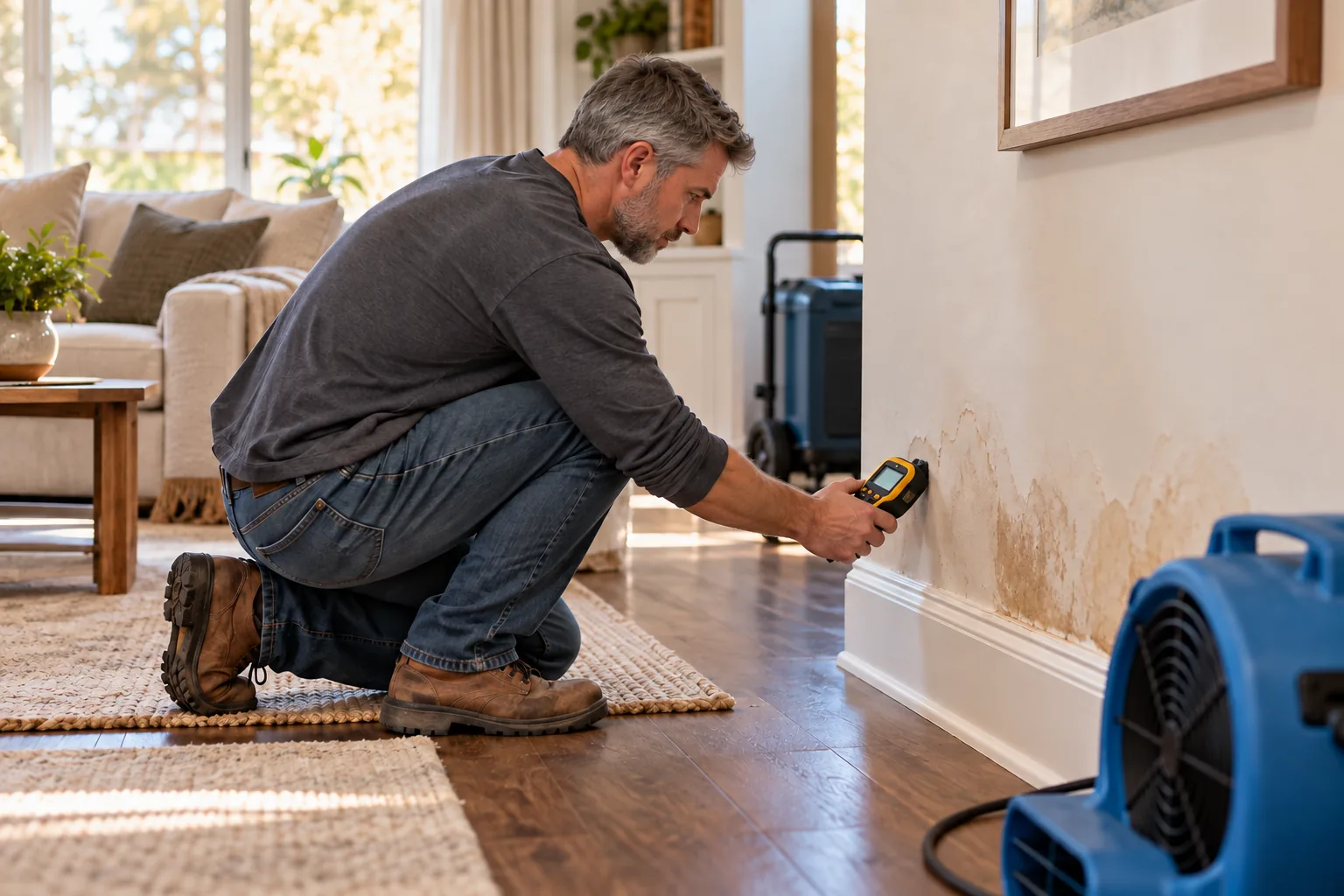
Pin and pinless meters and thermal imaging find where the water went, including behind walls and under floors.
- 02
Equipment placement
Air movers and low-grain dehumidifiers are sized to the room, not guessed at, and placed to move air across every wet surface.
- 03
Controlled demolition
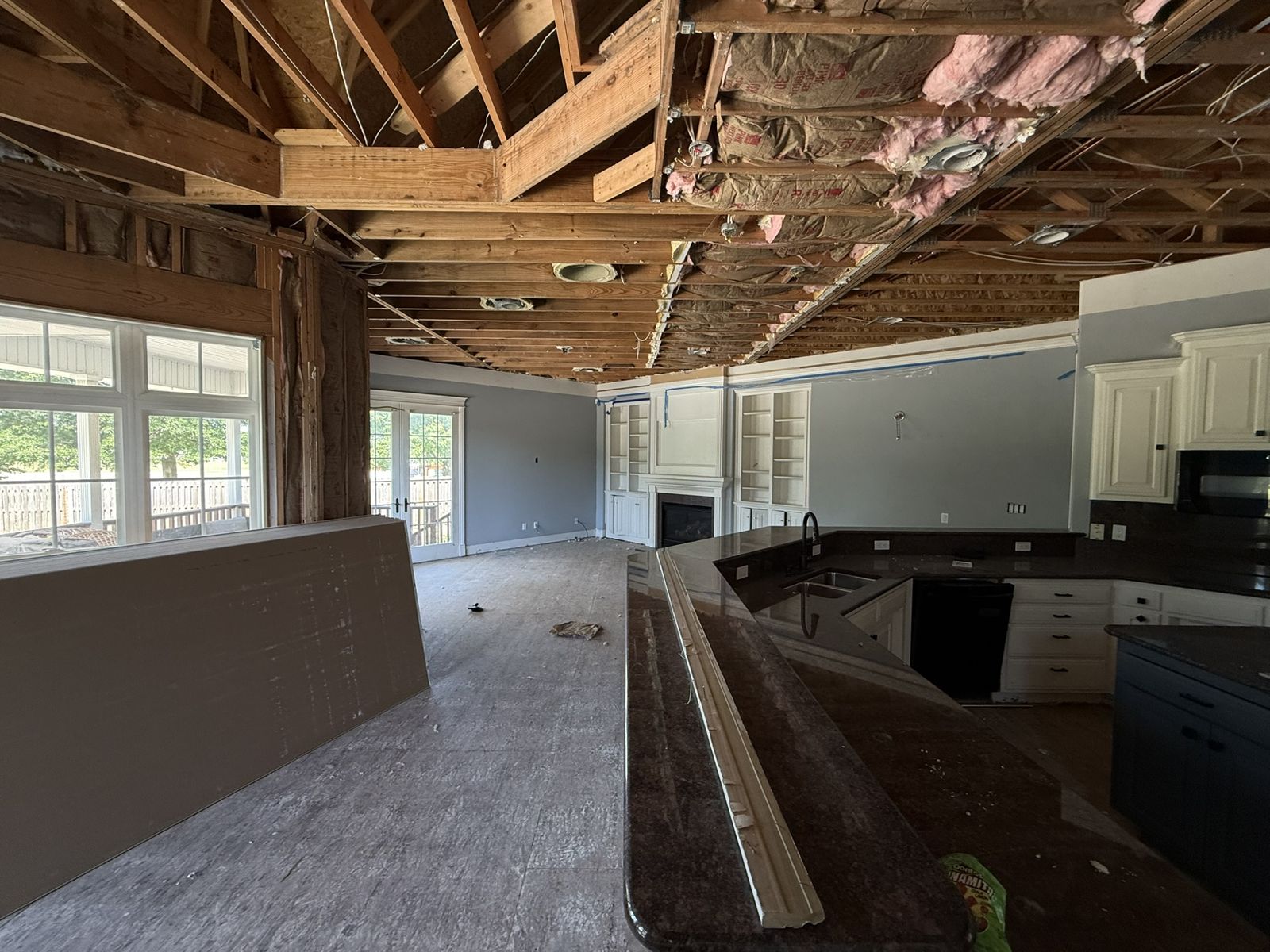
Only materials that can’t dry in place, like saturated insulation or swollen baseboard, are removed. Everything else is dried and kept.
- 04
Daily readings
We log temperature, humidity and material moisture every day and adjust the equipment as the building dries.
- 05
Dry-standard sign-off
Drying ends when each material reaches its dry standard, not on a schedule. You get the full log for your claim.
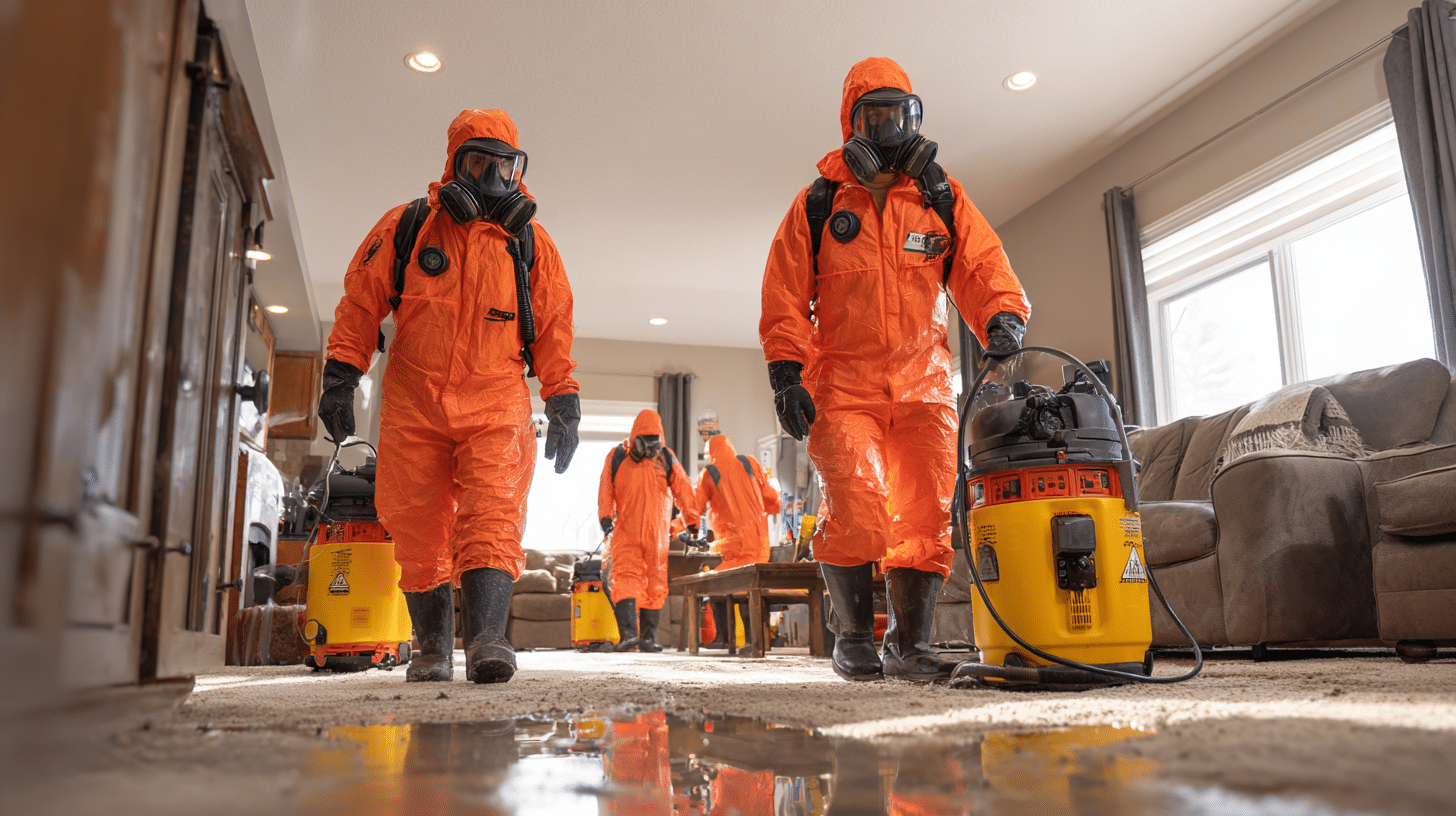
 IICRC-certified
mitigation team
Where water hides in a Northwest Arkansas home.
The materials that hold the most water are the ones you can’t see. On a typical loss we are drying:
- Subfloor and the cavity below it
- Wall cavities and insulation
- Drywall above the visible water line
- Cabinet toe-kicks and built-ins
- Crawlspaces and HVAC ductwork
Dry first. Then rebuild.
Once the readings hit dry standard, Bear’s own construction team replaces what was removed and finishes the room, so you never hand the job to a second contractor.
Learn About Water Damage RepairsWe document it so your claim holds up.
Our drying logs are written the way adjusters expect them: daily readings, equipment lists and photos, so the claim holds up.
Damage documentation
Photos, moisture readings and daily logs from the first visit on.
Itemized estimates
Mitigation and rebuild scopes written to industry standards.
Adjuster coordination
We meet the adjuster on site and answer their questions so you don't have to.
Structural drying, answered.
How do I know my home is truly dry?
Not by how it looks or feels. A home is dry when moisture readings across the affected walls, subfloor and framing reach their target levels and hold steady between daily checks. We take those readings every day and stop when the numbers say it is dry, not when the calendar does.
Can I use store-bought fans and dehumidifiers instead?
For a very small leak caught within a few hours on a hard floor, sometimes. Once water has reached drywall, subfloor or wall cavities, household fans and dehumidifiers are usually undersized for the job, and moisture left in the structure is how mold starts.
How is drying different for hardwood floors and carpet?
Carpet and pad can sometimes be dried in place when the water was clean and extraction started quickly, though the pad often has to come out. Hardwood absorbs water through its face and edges and can cup or buckle within a day or two, so it usually needs specialized floor drying set directly on the boards.
Do I need to leave my home during drying?
Usually not. Most families stay in the unaffected rooms. The equipment is loud and runs around the clock, so if it has to run in a bedroom or the only bathroom, staying elsewhere for a few days can be easier. Sewage losses are different and often mean leaving until cleanup is done.
Does homeowners insurance cover professional drying?
Sudden and accidental water damage, like a burst pipe, is typically covered, including the drying. Long-term leaks are often excluded, and flooding from outside the home usually needs a separate flood policy. We document every reading so the claim is decided on evidence.
More water damage services.
 Water RemovalCommercial-duty pumps and vacuums extract water fast to limit the damage.Water Damage RepairsExpert assessment, thorough restoration and full documentation.
 Flood Damage CleanupDebris removal, drying and disinfection after a flood.
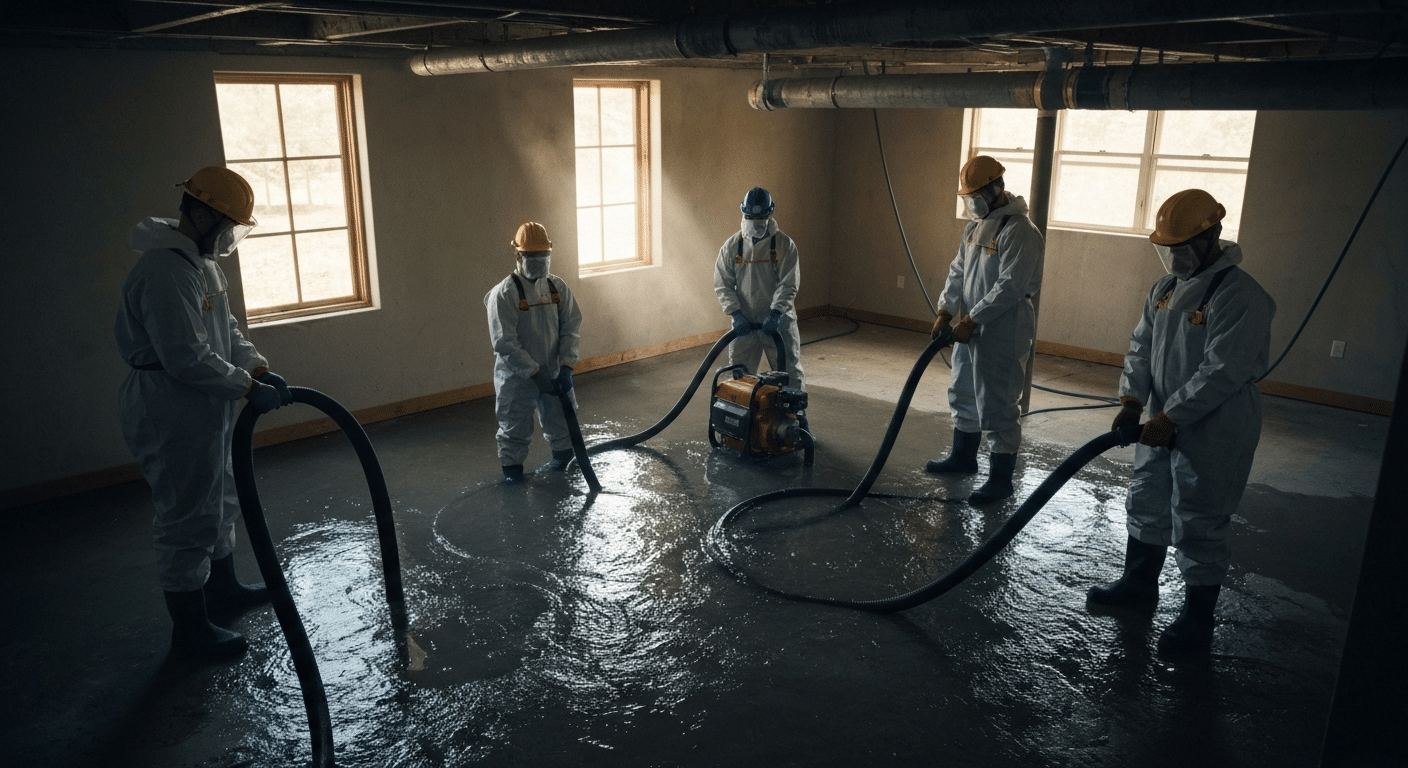 Sewage CleanupSanitization, decontamination and structural restoration.
 After Water DamageWhat to do in the first hour: shut-offs, photos and when to call.Water Damage overviewEvery water damage service Bear offers, and how they fit together.
Still wet after a leak? Call Bear.
Call now for immediate dispatch, or send a note for anything that can wait until morning.