

A clean vent is a safer dryer.
Bear technicians clean the full vent run, from the back of the dryer to the hood outside, so lint stops collecting where the heat can reach it.
Smell burning? Stop the dryer and callSigns your vent needs cleaning.
Lint buildup is a fire risk and makes every load take longer.
- 01Clothes take longer to dry
A clogged vent traps hot, moist air in the drum.
- 02The dryer or clothes get very hot
Restricted airflow makes the dryer overheat.
- 03A burning smell
Lint near the heat source is a fire hazard. Stop using the dryer and call.
- 04Lint around the outside vent
Lint that cannot get out builds up along the run.
What a full-run cleaning covers.
Every step of the vent, not just the part you can see behind the dryer.
We pull the dryer out and look at the transition duct, the wall connection and the route to the outside.
Rotary brushes and vacuum extraction clear lint from the whole duct, not just the first few feet.
Lint, nests and debris come out of the exterior vent, and we check the flap opens and closes.
The transition duct is checked for crushing, kinks and loose joints before it goes back on.
We run the dryer and confirm air moves freely out of the vent before we leave.
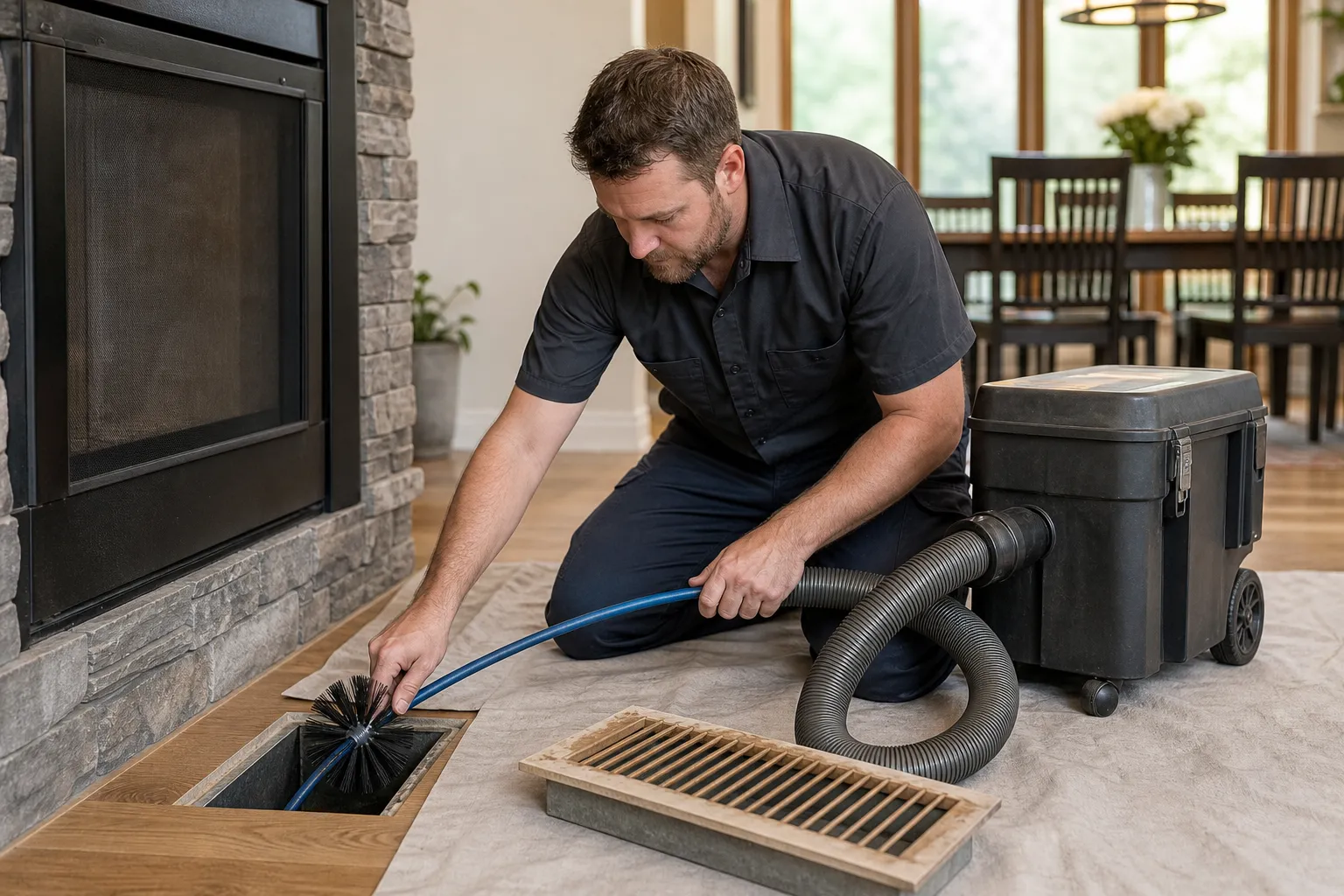
Lint is fuel. The vent is where it collects.
Every load sends lint toward the vent. What the screen misses settles along the duct, and each layer slows the airflow. Slower airflow means more heat in the drum, longer cycles and lint sitting closer to the heat source.
Long runs, tight bends and second-floor laundry rooms collect lint faster. So do vents with crushed or plastic transition hoses.
Home clothes dryer fires in the U.S. each year.
U.S. Fire AdministrationCaused by failure to clean, the leading factor.
U.S. Fire AdministrationDryer fires peak in fall and winter, highest in January.
U.S. Fire Administration- Clean the lint screen before every load.
- Check the outside hood after storms and clear anything blocking the flap.
- Use a metal transition duct, never plastic or foil.
- Don’t leave the dryer running when nobody is home.
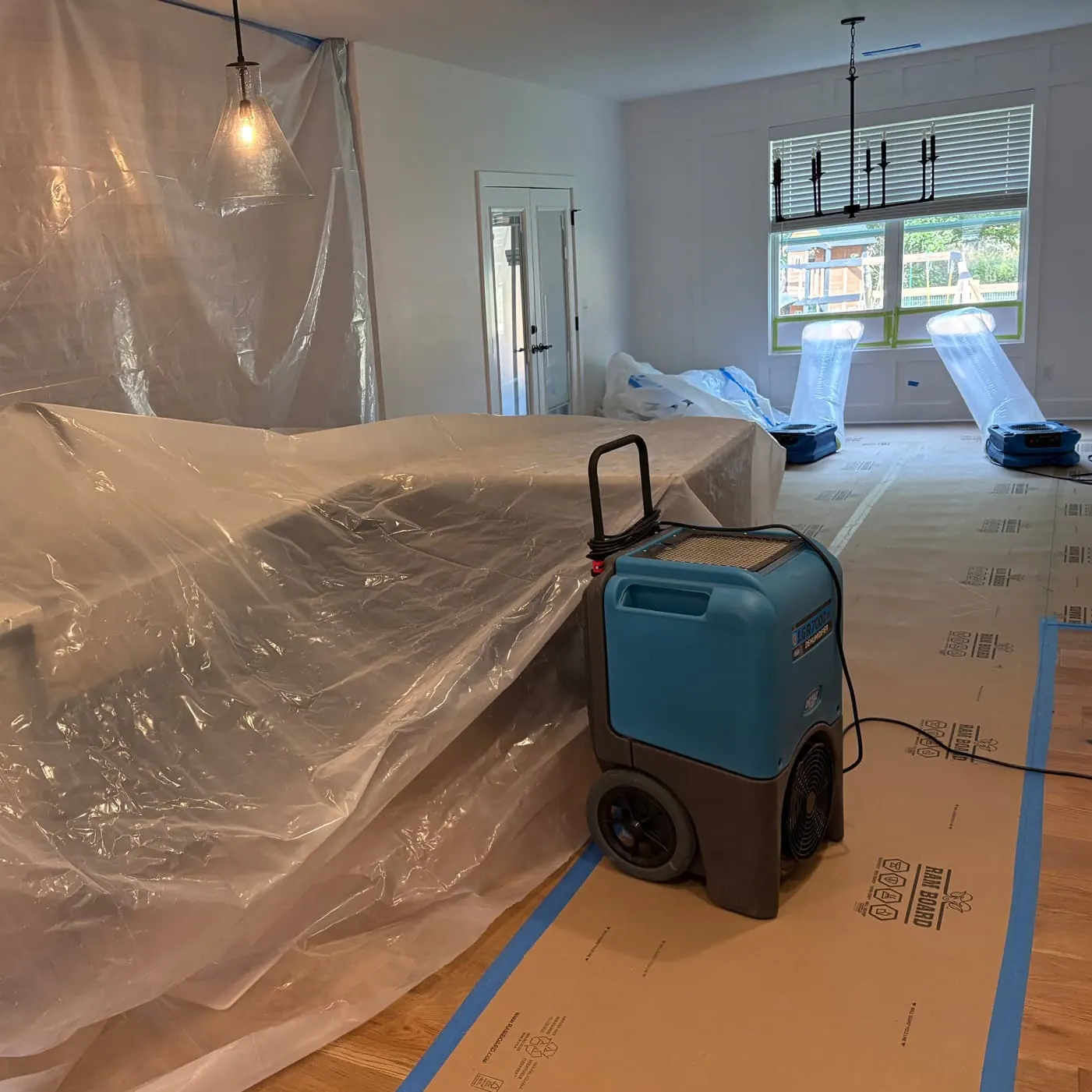
Dryer fire or smoke damage? We restore that too.
Bear is an HVAC company and a restoration company. If a dryer fire happens, one team cleans up the smoke and soot and rebuilds what the fire touched.
Every dryer vent guide, one click away.
Signs, fire prevention and what professional cleaning costs.
The warning signs to watch for at home.
Read the guide Guide 02Dryer vent fire preventionHow lint becomes a fire risk, and how to stop it.
Read the guide Guide 03Professional dryer vent cleaningWhat a full-run cleaning covers, start to finish.
Read the guide Guide 04Dryer vent cleaning costWhat drives the price: vent length, route and access.
Read the guideRated 4.9 on Google across 76 reviews. Customers name the technicians who showed up, because the same people see the job through.
Read all reviewsJuan did a great job of coming out and fixing my HVAC and also coming back out and doing an overall maintenance check. Clayton was super helpful organizing and communicating everything with me.
The entire Bear Team is incredible! Juan and Clayton did a fantastic job with my HVAC. They fixed and checked my entire system, allowing it to run better and more efficient.
My upstairs unit was not working. Clayton was here within an hour. He was very polite and knowledgeable. He found the problem and fixed it.
Dryer vent questions, answered straight.
How often should a dryer vent be cleaned?
At least once a year for most homes. Busy households, long vent runs and second-floor laundry rooms need it more often. If drying times start creeping up, don’t wait for the calendar.
Can a clogged dryer vent cause a fire?
Yes. Lint is highly flammable, and a clogged vent traps heat near it. Failure to clean is the leading cause of home dryer fires, according to the U.S. Fire Administration. Cleaning the full run removes that fuel.
Can I clean the vent myself?
You can and should clean the lint screen every load and keep the outside hood clear. Most store-bought kits only reach the first several feet of duct, so lint further along the run stays put. A professional cleaning covers the full length.
What does professional cleaning cost?
It depends on the length and route of the vent and how hard the exterior hood is to reach. Our cost guide explains what drives the price, and you approve the price before we start.
I smell burning. What should I do?
Stop the dryer and unplug it, or switch off its breaker if it is safe to reach. Then call us. If you see smoke or flames, get everyone out and call 911.
Do you handle damage from a dryer fire?
Yes. Bear is a restoration company too. Our restoration team cleans up smoke and soot and rebuilds what the fire damaged, and documents it for your insurance claim.
Dry faster, safer. Call Bear.
- A person answers, 24 hours a day
- Licensed technicians, never on commission
- You approve the price before work begins
Based in Bentonville, with licensed HVAC technicians across Benton and Washington counties.