
How Many Dehumidifiers Do You Need for Water Damage
Wondering how many dehumidifiers you need for water damage? Learn the formulas, room sizes, and placement rules that determine the right equipment count.
What Determines How Many Dehumidifiers a Wet Room Actually Needs
Water damage does not follow a simple formula, but there is a reliable starting framework. Industry restoration practice, guided by the IICRC standard for water damage restoration, uses the concept of psychrometrics, the relationship between air temperature, humidity, and drying capacity, to determine equipment load. In plain terms, you need enough dehumidification capacity to pull the moisture out of both the air and the saturated materials within a defined timeframe.
For residential water damage with moderate saturation, one industrial dehumidifier handles roughly 500 to 800 square feet of affected space. That range shifts depending on several variables: ceiling height, how long the water sat before extraction began, what materials got wet, and whether the space is open or compartmentalized. A single soaked drywall surface in a bathroom is a different drying challenge than three rooms of wet hardwood with a flooded subfloor beneath them.
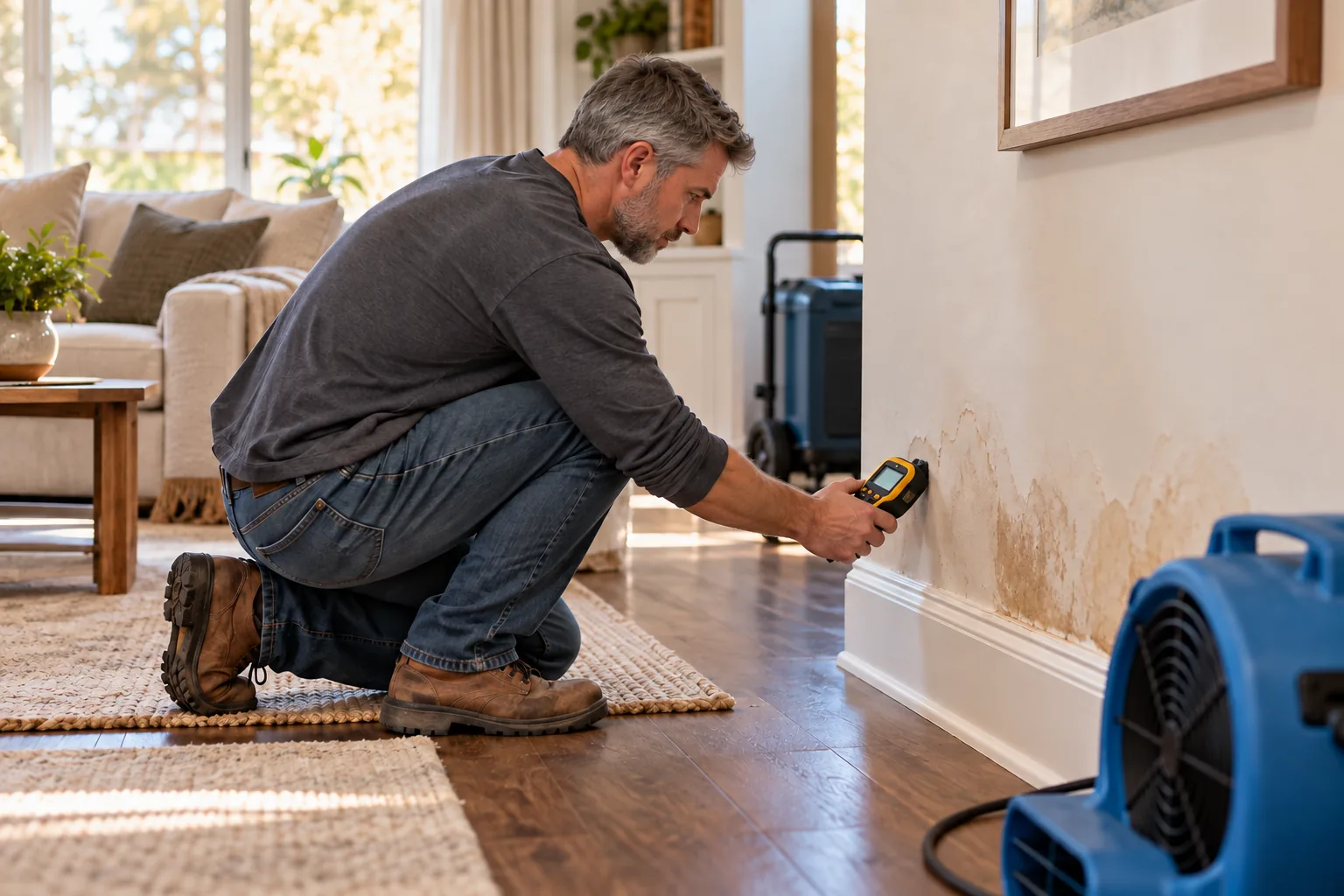
Bear uses thermal imaging moisture detection and pin-type moisture meters to identify every wet zone, including areas that look dry but are not. That data drives equipment decisions, not assumptions. When you skip that step, you either over-equip at unnecessary cost or under-equip and extend drying time past the safe window. Either outcome serves no one well.
For deeper context on the drying process itself, the post on water damage drying and dehumidification in Northwest Arkansas covers the full timeline and conditions that affect structural drying in this region.
Industrial vs. Consumer Units: Why the Equipment Type Changes Everything
For complete coverage, see our Industrial Dehumidifiers Rental: What You Need to Know resource on industrial dehumidifier rental options for water damage response.
A consumer dehumidifier from a hardware store might pull 30 to 70 pints of moisture per day. An industrial low-grain refrigerant (LGR) unit pulls 100 to 150 pints per day or more, depending on conditions. That is not a minor difference. It means a consumer unit might require three or four times the quantity to match the output of one industrial unit, and even then, it likely cannot achieve the low grain readings required to properly dry structural materials.
Industrial units also operate in lower temperature ranges and maintain efficiency as ambient humidity drops, which consumer units do not. Once a room reaches 50 percent relative humidity, many consumer units stall out. LGR units keep working down into the 20 to 30 percent grain range, which is what drying hardwood, drywall, and subfloor actually requires.
This is why renting the right equipment matters. If you are managing a water loss in a Bentonville or Rogers home and someone drops off two consumer-grade units and calls it done, the drying process is already compromised. Your dehumidifier rental after water damage timeline and costs go up every day drying is incomplete.
What Does Grain Per Pound Mean for Drying?
Grain per pound (GPP) is the unit used to measure moisture content in air. Dry air sits around 30 to 40 GPP. Air in a freshly flooded room can reach 100 GPP or higher. Structural drying protocols require bringing ambient air down below 40 GPP before materials can dry consistently. Consumer units rarely achieve this. Industrial LGR units are designed specifically for it.
How Do Airmovers Factor Into the Equipment Count?
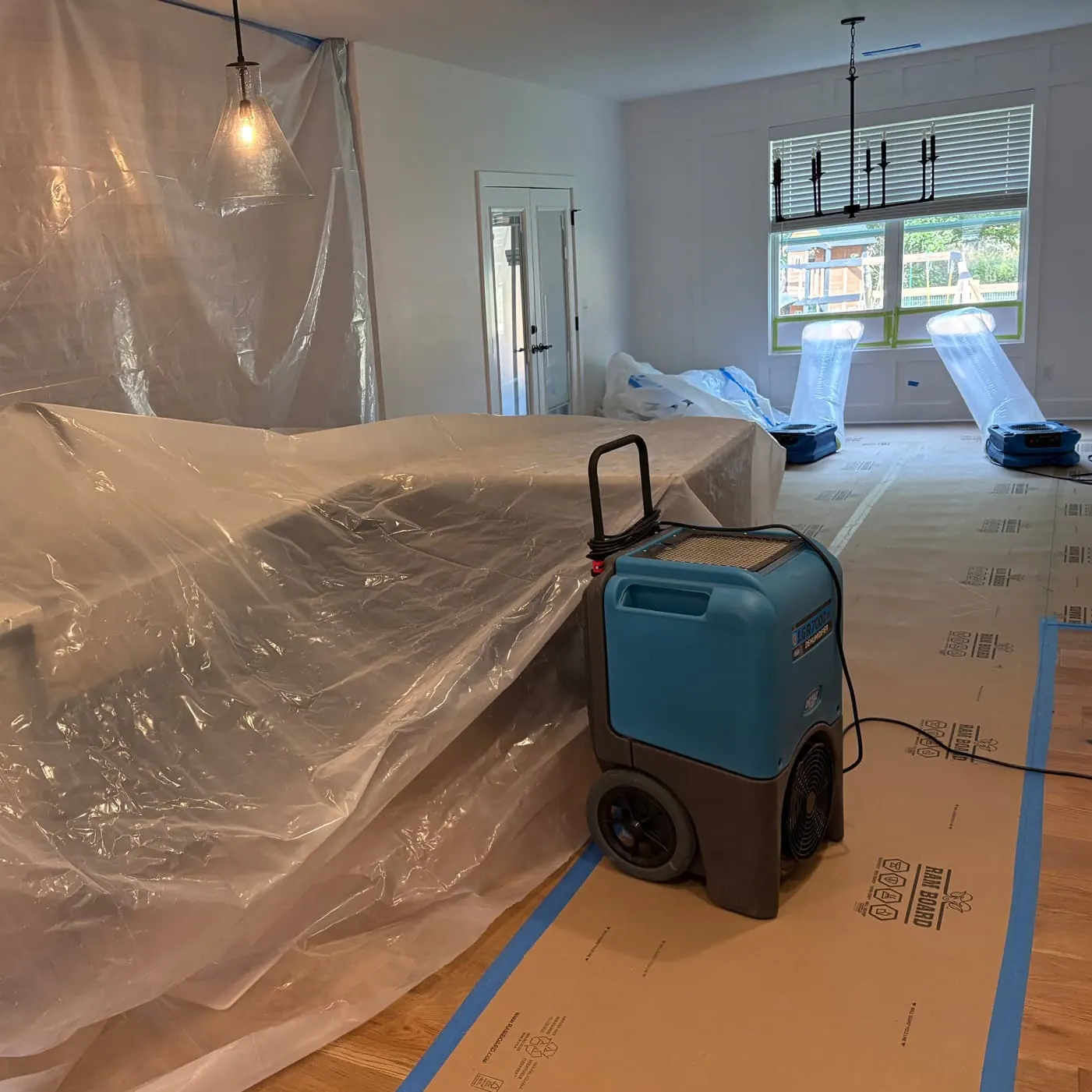
Dehumidifiers remove moisture from the air. Airmovers (high-velocity fans) pull moisture out of saturated materials and push it into the air for the dehumidifiers to capture. They work as a system. A standard ratio is one to one and a half airmovers per dehumidifier. Running dehumidifiers without airmovers leaves moisture locked in walls and floors. Running airmovers without enough dehumidifier capacity just recirculates humid air. Both matter equally.
Room-by-Room Breakdown: How to Count Units by Space Type
Different spaces in a home have different drying demands. Here is how to think through equipment needs by room type.
How Many Units Does a Flooded Basement Need?
Basements are the hardest space to dry. They have limited airflow, often below-grade concrete, and frequently hold standing water longer. A flooded basement of 1,000 square feet with saturated concrete and drywall may need three to four industrial dehumidifiers running simultaneously, along with multiple airmovers positioned to create a drying circuit around the perimeter. If the basement has a crawl space beneath it, add at least one additional unit dedicated to that zone. The post on basement flooding cleanup in Northwest Arkansas details why below-grade spaces require a different drying approach entirely.
What About Bathrooms and Small Rooms?
Small rooms do not always need a dedicated unit, but they cannot share equipment with an adjacent space if there is a door between them. Moisture does not move freely through a closed door. A flooded bathroom, even at 80 square feet, may need its own unit running inside the closed space with a small airmover directed at the wet wall cavity or subfloor. Ventilation matters here too. A bathroom exhaust fan running during drying actually pulls conditioned, drier air out of the space, which works against the equipment. Technicians typically seal those off during the drying cycle.
Moisture Classes and How They Affect Equipment Count
The IICRC S500 standard classifies water damage into four moisture classes. Class 1 is minimal absorption in a single material. Class 4 involves specialty drying situations with deeply saturated dense materials like hardwood, plaster, or concrete. The class determines not just how many units you need, but how long they need to run and what type of equipment is appropriate. According to IICRC S500 restoration guidelines, Class 3 and Class 4 losses require significantly higher equipment density than a basic floor-wet scenario, often doubling or tripling standard unit counts.
Most homeowners dealing with a burst pipe repair emergency situation are looking at Class 2. A roof failure or prolonged flooding often escalates to Class 3. Each step up in class means more units, longer runtime, and more frequent moisture readings to track progress. The source of water gets fixed first, then the drying assessment determines equipment load based on how far water traveled.
Does Carpet vs. Hardwood Change the Count?
Yes. Carpet and pad hold enormous amounts of water but release it relatively quickly once water removal is complete. Hardwood absorbs slowly and releases slowly. Dense hardwood floors may require targeted drying mats in addition to standard airmovers and dehumidifiers to prevent cupping and buckling. Concrete and masonry absorb water deeply and may require desiccant dehumidification rather than refrigerant-based units for complete drying. Getting the equipment type wrong for the material type is one of the most common errors in residential water damage response.
When to Add Units Mid-Drying and How to Track Progress
Drying is not a set-it-and-forget-it process. Moisture monitoring during water damage restoration should be performed every 24 hours. If GPP and material moisture content are not dropping consistently, the drying plan needs adjustment, either more units, repositioned airmovers, or both. A standard residential drying job should show measurable progress within the first 24 hours. If readings are flat or rising, equipment is insufficient or improperly placed. The goal is to hit dry standard readings within 3 to 5 days for most Class 2 losses.
If readings plateau and structural materials remain wet past day 3, the risk of secondary mold growth increases significantly. According to EPA mold guidelines, mold can begin to develop within 24 to 48 hours of water exposure under the right conditions. Proper drying equipment, in the right quantity and running for the full required period, is the primary defense against that outcome. If mold does take hold, the scope of the project expands considerably into mold removal territory.
What Signs Indicate Drying Is Not Working?
Musty odors appearing on day two or three are a warning sign. So are walls that still feel cool to the touch on the exterior side, or floors that still flex underfoot. Condensation on windows and cold surfaces means the dehumidification capacity is being exceeded by the ambient moisture load. These are signals to add units immediately, not wait for a scheduled check-in.
Sewage and Category 3 Water: Does Equipment Count Change?
Category 3 water, which includes sewage and floodwater carrying contaminants, changes the restoration protocol significantly. Contaminated materials cannot simply be dried in place. Drywall, insulation, and flooring that have been exposed to sewage are typically removed rather than dried. This actually reduces the drying equipment footprint in some cases, because fewer saturated materials remain. However, the structural framing and subfloor still require drying once contaminated materials are removed, and containment measures during removal affect airflow and equipment placement. The post on sewage cleanup and biohazard restoration in Bentonville covers the full scope of Category 3 responses. For direct remediation, the sewage contamination sanitization in NWA page outlines the removal and drying process in detail.
Common Mistakes Homeowners Make When Renting Dehumidifiers
Renting one unit for a multi-room loss is the most common error. The second is placing the unit in the center of the room rather than adjacent to the wettest wall or floor zone. Third is turning off equipment overnight to save on electricity, which breaks the continuous drying cycle and allows moisture levels to re-equilibrate into structural materials. Fourth is failing to empty collection tanks or check condensate drain lines, which causes units to shut off automatically and run no hours at a
Bear’s water damage services.
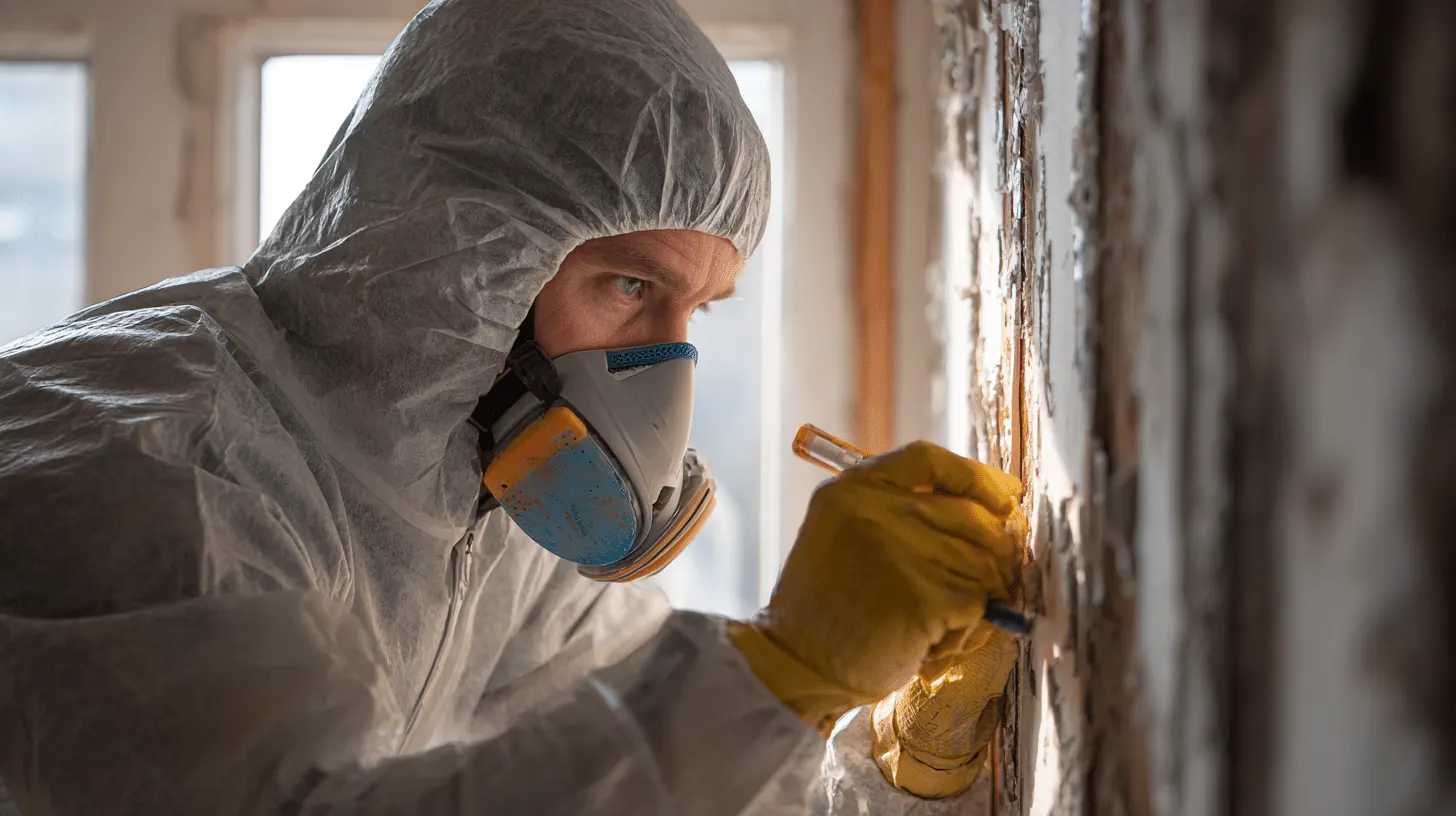 Water RemovalCommercial-duty pumps and vacuums extract water fast to limit the damage.
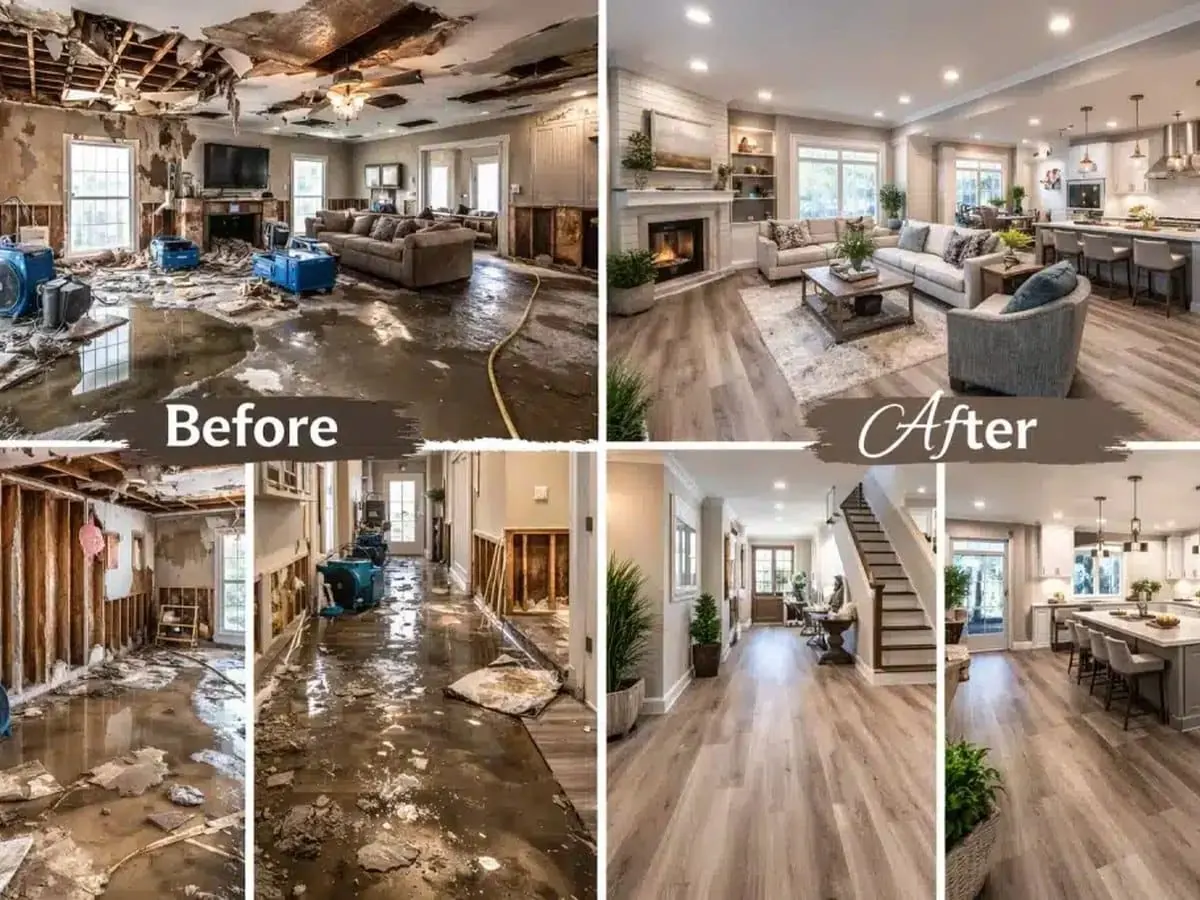 Structural DryingAir movers, dehumidifiers and moisture meters pull water out of framing, subfloor and drywall.
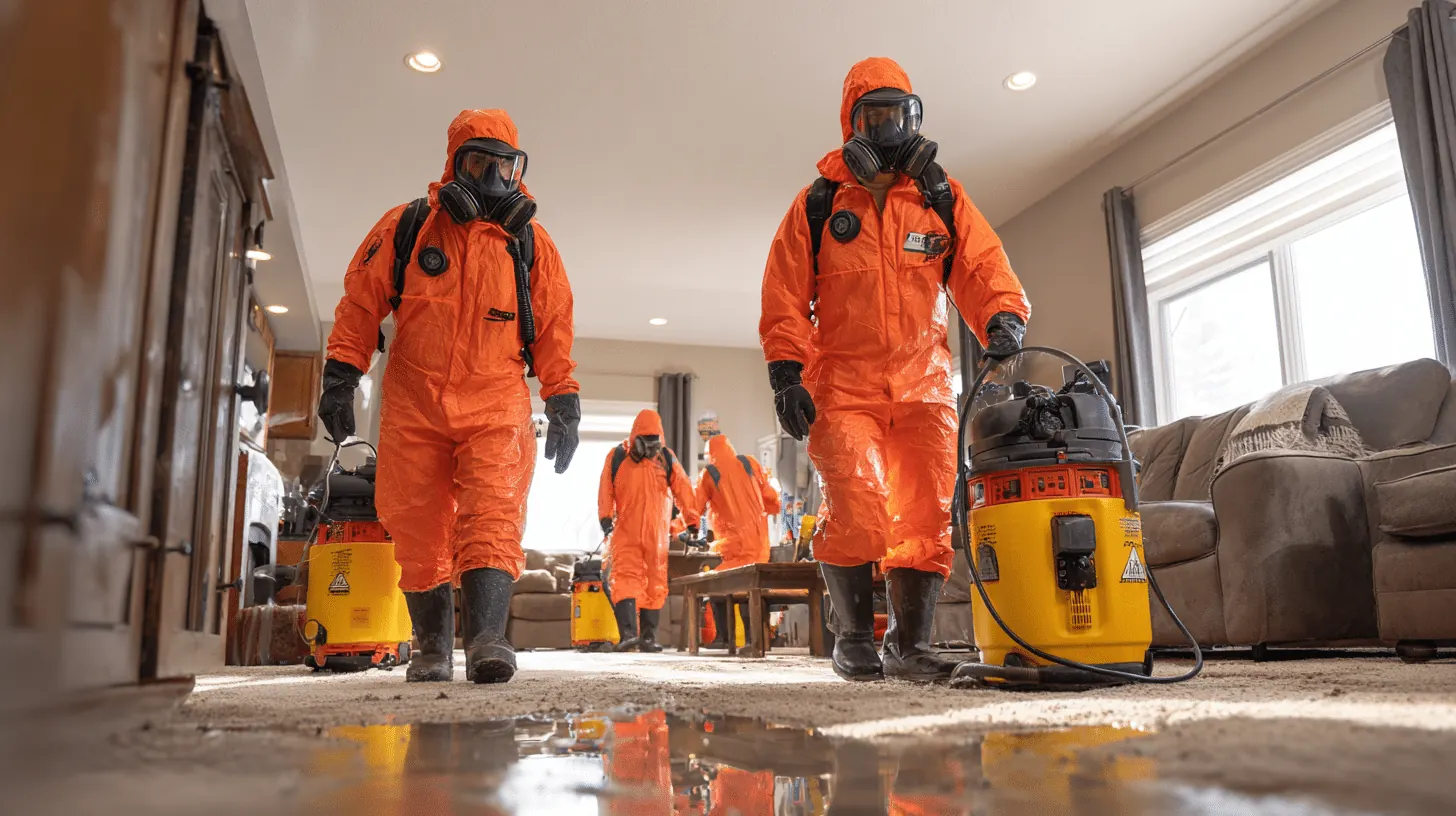 Water Damage RepairsExpert assessment, thorough restoration and full documentation.
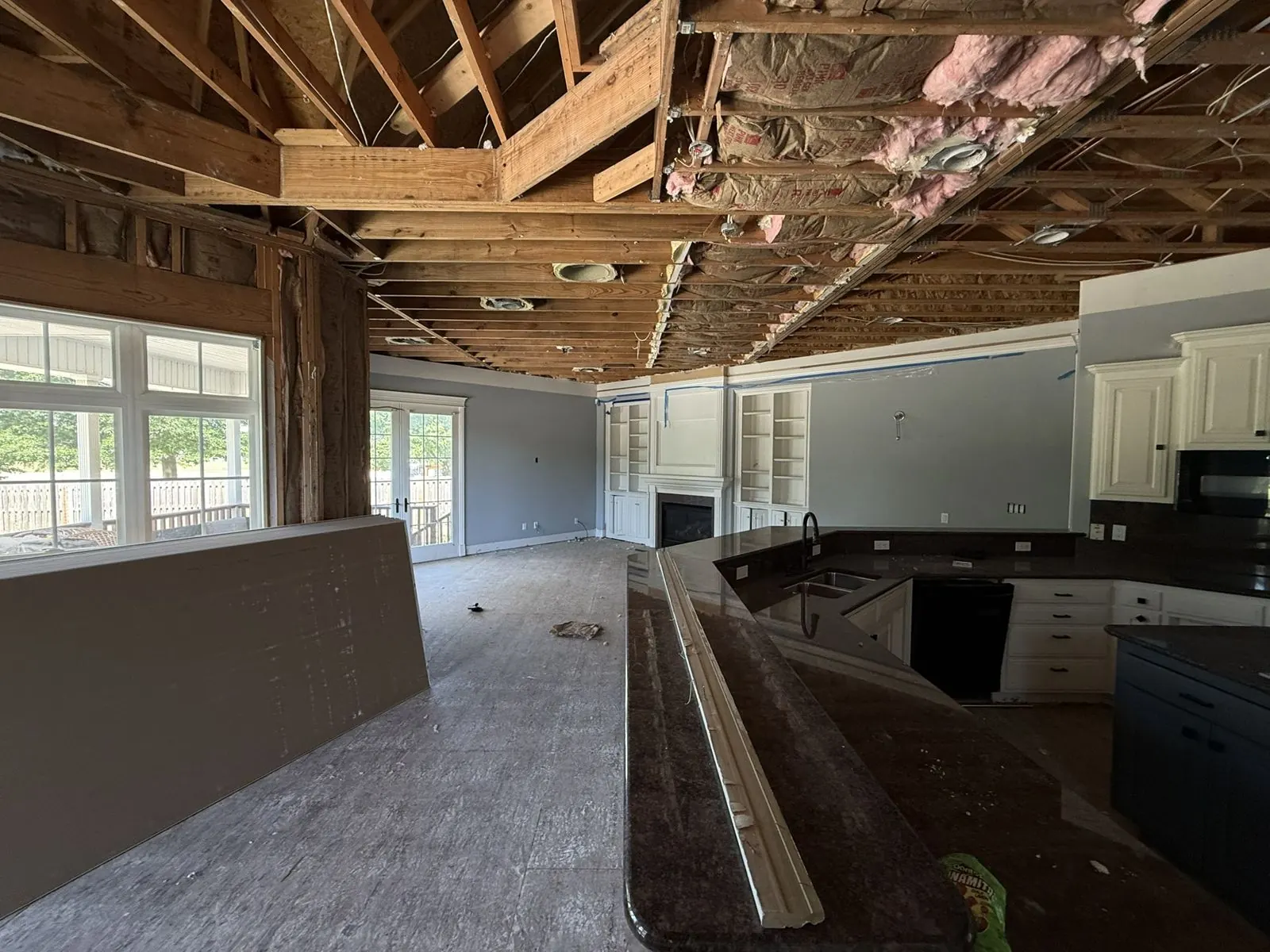 Flood Damage CleanupDebris removal, drying and disinfection after a flood.
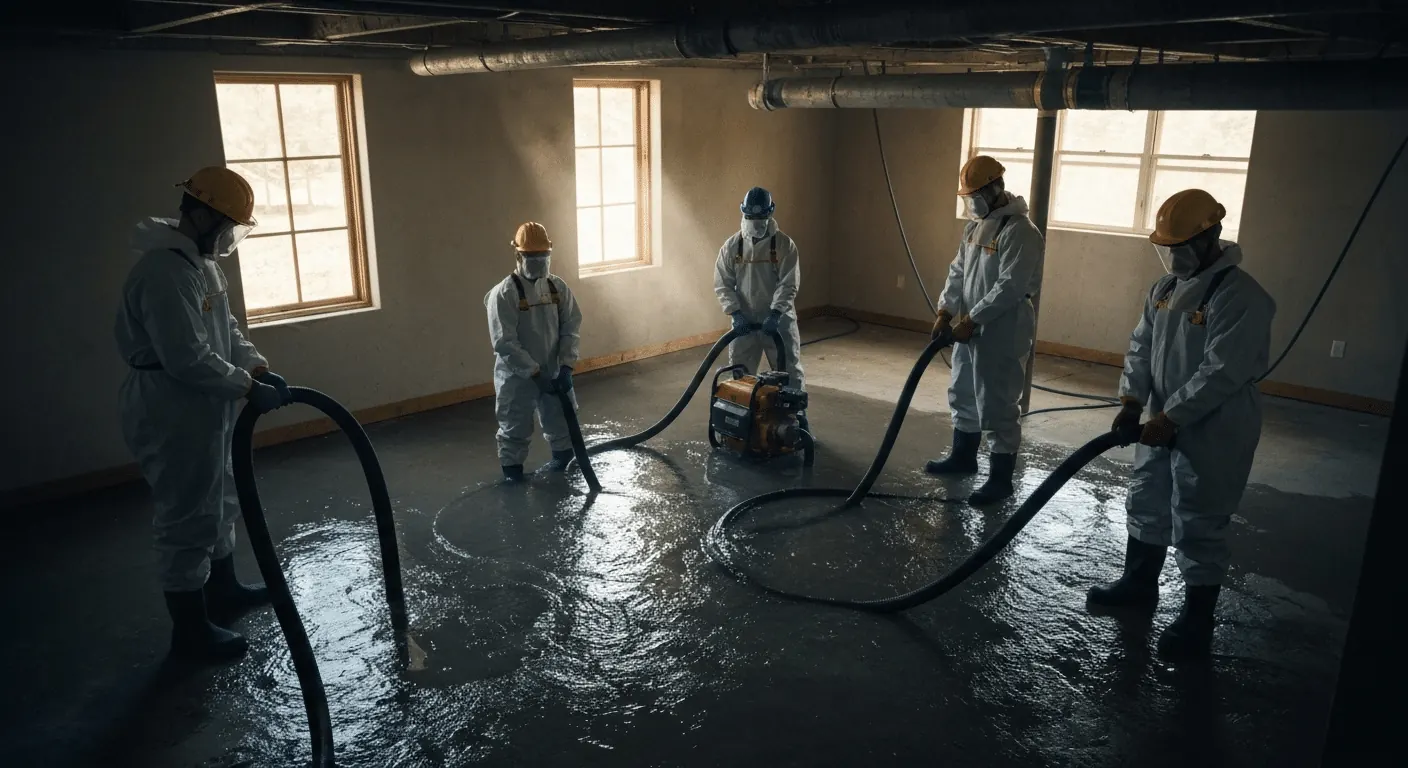 Sewage CleanupSanitization, decontamination and structural restoration.After Water DamageWhat to do in the first hour: shut-offs, photos and when to call.