

Key Takeaways
Structural drying after flooding is a multi-step process that typically takes 3 to 5 days using professional-grade dehumidifiers, air movers, and moisture monitoring equipment. Skipping steps or stopping too early causes hidden mold growth, wood rot, and structural failure. The process follows a strict sequence: water extraction first, then drying, then verification with moisture meters before any repairs begin.
- Water extraction must happen within the first 24 to 48 hours to reduce mold risk significantly.
- Professional structural drying targets indoor relative humidity below 50 percent and material moisture content below 16 percent in wood assemblies.
- Air movers and dehumidifiers work as a system, not independently. Running one without the other slows drying dramatically.
- Walls, subfloors, and wall cavities hold moisture long after surfaces feel dry to the touch.
- Insurance documentation of moisture readings at every stage protects homeowners during the claims process.
What the Structural Drying Process Actually Does to Your Home
When floodwater enters a home, it does not just wet the surfaces you can see. Water moves by capillary action into wall cavities, soaks into subfloor sheathing, saturates insulation, and wicks up drywall from the bottom up at a rate of roughly one inch per hour for standard gypsum board. By the time water reaches the surface of a wall 12 inches from the floor, the cavity behind it may already hold standing water. That is the core problem structural drying solves. It removes moisture not just from air and surfaces but from inside the building materials themselves.
The goal of professional structural drying is to return building materials to their equilibrium moisture content, which for wood framing in Arkansas’s climate typically falls between 8 and 13 percent. Standard drywall should read below 1 percent on a pin-type moisture meter before it is considered dry. These are not rough estimates. They are measurable targets verified with calibrated instruments at every stage of the process. Stopping work before those numbers are reached, even when a room smells fine and feels dry, leaves the conditions mold needs to colonize a structure.
Bear Restoration technicians document moisture readings with calibrated meters at the start and throughout each drying cycle, creating a written record that goes to the homeowner and the insurance adjuster. This matters because disputes over whether drying was complete are common in water damage claims.
The Four Phases of Professional Structural Drying
For complete coverage of the equipment and methods involved, see our Drying & Dehumidification Services After Water Damage resource. Structural drying follows a sequence that cannot be reordered without reducing effectiveness. Each phase depends on the one before it.
Why does water extraction come before drying equipment is set up?
Dehumidifiers cannot pull standing water from a floor. They process airborne moisture vapor only. Placing dehumidification equipment in a room that still has standing water or heavily saturated carpet wastes time and overloads the equipment. Professional water removal services use truck-mounted or portable extractors that generate vacuum pressure capable of pulling hundreds of gallons per hour from flooring, carpet, and pad. Only after bulk water removal is complete does it make sense to begin evaporative drying with air movers.
What happens during the evaporation and dehumidification phase?
Air movers are positioned to create a consistent airflow pattern across wet surfaces, typically one unit per 10 to 16 linear feet of wall or per affected room. They accelerate evaporation by moving the humid air layer that sits directly against wet materials. Dehumidifiers then capture that evaporated moisture before it can re-deposit on cool surfaces elsewhere in the structure. According to IICRC standards for water damage restoration, commercial dehumidifiers used in structural drying should be capable of removing at least 25 liters of water per day at standard test conditions. Residential units sold at hardware stores typically remove 20 to 70 pints per day, well below what a flooded room requires.
How do technicians know when the structure is actually dry?
Daily monitoring with calibrated pin and pinless moisture meters tracks progress in walls, floors, and ceilings. Technicians map moisture readings across the affected area and compare them against a drying goal established on day one. A drying log records readings at multiple points each day. If readings plateau rather than dropping, it signals a hidden moisture pocket, failed vapor barrier, or inadequate equipment placement that needs to be corrected before the clock runs out. The EPA’s guidance on mold and moisture notes that mold can begin growing within 24 to 48 hours under the right humidity conditions, which is why daily monitoring is not optional.
Equipment Used in Structural Drying and Why It Matters
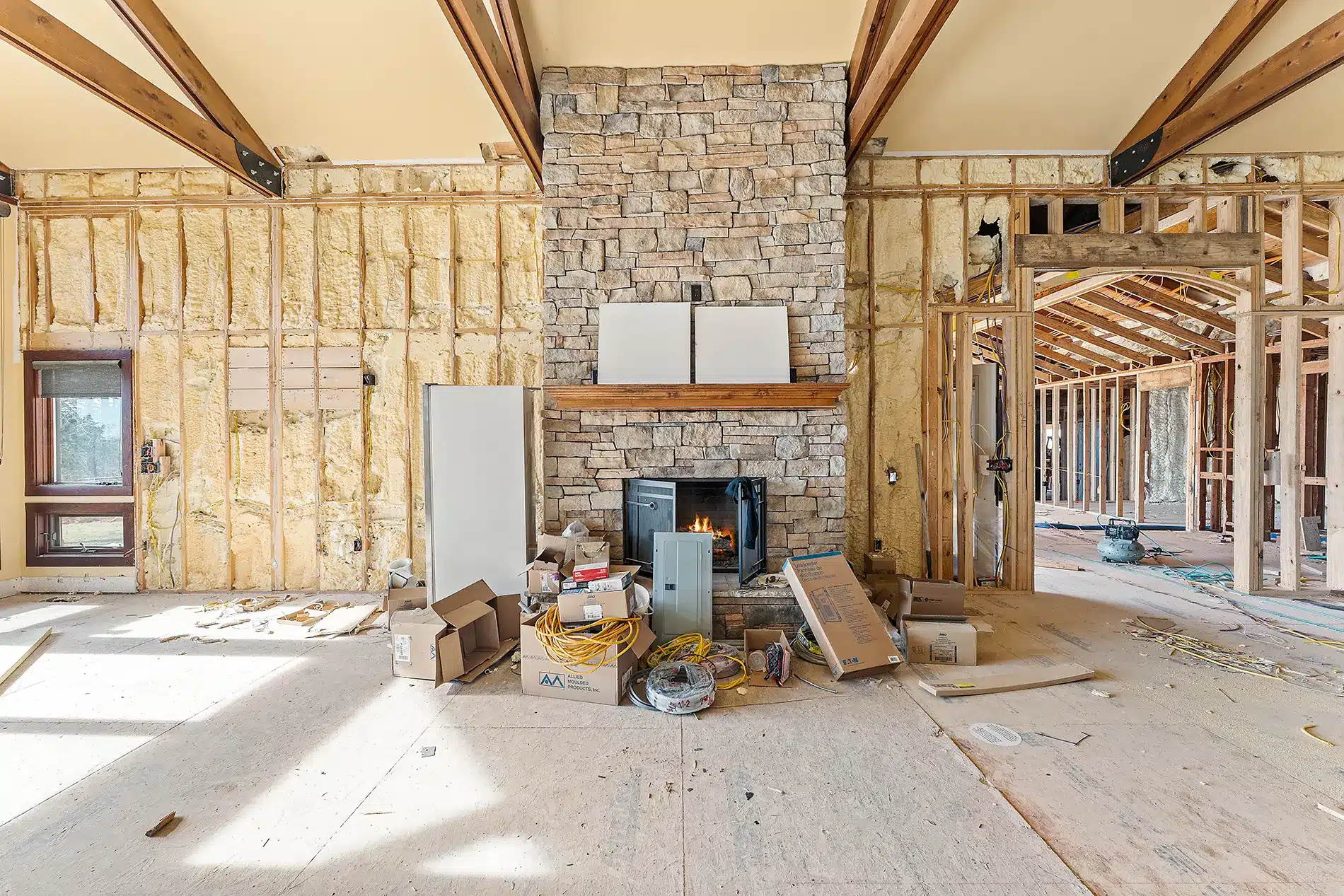
The equipment combination used determines how fast drying happens and whether hidden cavities actually dry out. A common mistake in DIY drying attempts is running a single consumer dehumidifier in a flooded basement and checking back in a week. That approach rarely works on flooded structures because consumer units lack the capacity and because wall cavities need directed airflow, not just ambient air movement.
What are the different types of dehumidifiers used in flood drying?
Refrigerant dehumidifiers are the most common type used in residential structural drying. They cool air below its dew point to condense moisture, then reheat the air before exhausting it. They perform best when ambient temperatures stay above 60 degrees Fahrenheit. Desiccant dehumidifiers use silica gel or similar materials to absorb moisture chemically and work better in cold environments or when very low humidity targets are required. For most NWA flood situations, refrigerant units are the right tool, and restoration crews typically deploy one commercial unit for every 500 square feet of affected space.
Do air movers and fans do the same thing?
No, and this distinction matters. Box fans and ceiling fans move air around a room but do not direct high-velocity airflow at a surface at the specific angle and volume needed to accelerate evaporation from materials. Professional air movers, also called axial fans or snail fans in the industry, create directional low-angle airflow at 1,200 to 3,000 cubic feet per minute. That concentrated flow disrupts the humid boundary layer against wet surfaces and feeds evaporated moisture toward the dehumidifier. Running regular household fans instead of air movers extends drying time significantly and often results in incomplete drying in wall cavities.
Timeline for Structural Drying After a Flood
A typical Category 1 water loss (clean water from a supply line) affecting one room of hardwood or tile over a concrete slab dries in 3 to 5 days with properly deployed equipment. A Category 2 loss (gray water) or any loss involving wood subfloor, wall cavities, or insulation takes 5 to 7 days on average. Category 3 losses involving floodwater or sewage require additional disinfection steps before drying begins. For reference on water categories, FEMA flood recovery guidance distinguishes between water types because contamination affects both the safety of the drying process and what materials can be dried versus removed.
What factors extend drying time beyond 5 days?
Several conditions push structural drying past the typical window. Closed wall cavities that were not opened to allow airflow trap moisture and dry far more slowly than open framing. Spray foam insulation between studs does not absorb water the way fiberglass batts do, but it also traps water behind it against the sheathing. Homes with pier-and-beam construction frequently develop moisture problems in the crawl space that feed back into the subfloor. In NWA’s humid summers, outdoor humidity above 75 percent reduces the moisture gradient that drying equipment relies on and slows the entire process. Crews sometimes seal the structure and use desiccant equipment to compensate.
Can flooring be dried in place or does it need to come up?
Hardwood floors can sometimes be dried in place if water was present for under 24 hours and readings confirm the subfloor below is at or near normal moisture content. In most flood scenarios, hardwood cupping begins within hours of saturation, and the subfloor moisture content is too high to save the finish floor without removal. Carpet and pad almost never dry adequately in place after flooding because the pad acts as a sponge and holds contaminated moisture against the subfloor. Professional crews typically remove carpet and pad within the first day of a loss to allow subfloor access. Homeowners considering flood damage cleanup should have moisture readings done before deciding what to save.
What Goes Wrong When Structural Drying Is Skipped or Cut Short
The consequences of incomplete structural drying show up on a predictable timeline. Mold becomes visible on drywall surfaces between 5 and 10 days after moisture exposure in Arkansas’s warm months. Wood framing that stays above 19 percent moisture content for more than two weeks begins to show early fungal growth even without visible surface mold. Hardwood subfloor panels swell and buckle. Engineered wood loses structural integrity. These problems do not announce themselves with a smell or stain right away. They develop behind walls and under floors over weeks, then become visible when repair costs are two to four times what they would have been if drying had been completed correctly.
How does mold connect to incomplete drying?
Mold requires three things: a food source (wood, drywall, insulation), moisture above about 60 percent relative humidity at the material surface, and time. Structural drying removes the moisture variable. When drying stops early because surfaces feel dry or because equipment was pulled to save rental costs, residual moisture in wall cavities stays above that threshold. Mold begins colonizing in the dark, warm interior of wall assemblies where no one sees it for weeks. By the time a homeowner notices a musty odor or dark staining, the colony is established and mold removal becomes a separate remediation project on top of the original repair.
Does insurance cover mold if drying was incomplete?
Most standard homeowner policies cover mold that results directly from a covered water loss if the homeowner took reasonable steps to mitigate. If an adjuster or inspector determines that mold developed because drying was stopped early, or because the homeowner delayed calling for professional help, coverage can be disputed or denied. Keeping a complete drying log with daily moisture readings from a calibrated meter is the documentation that supports a claim. This is one practical reason to involve a professional crew from day one rather than attempting DIY drying and calling for help only after mold appears.
How Structural Drying Connects to Repairs and Reconstruction
Repairs cannot begin safely until the structure is verified dry. Installing new drywall over wet framing traps moisture inside the wall assembly and guarantees mold growth. Laying new hardwood over a subfloor that still reads 18 percent moisture content causes the new floor to cup and buckle within weeks. Contractors who skip the verification step, intentionally or because they were not told drying was incomplete, end up redoing work at the homeowner’s expense. The correct sequence is: dry first, verify with meters, then begin water damage repair. That sequence protects the repair work and the homeowner’s investment.
What does post-drying inspection cover before reconstruction starts?
A post-drying inspection documents final moisture readings in all affected materials, confirms that wall cavities, subfloor, and framing are within acceptable limits, checks for any areas of visible microbial growth that developed during the drying period, and produces a written clearance report. In insured losses, this report goes to the adjuster before the repair estimate is finalized. Some adjusters require a third-party industrial hygienist to sign off on clearance in larger losses. Bear Restoration produces drying logs and clearance documentation as a standard part of every water loss project, not as an add-on service.
Structural Drying in NWA’s Climate Conditions
Northwest Arkansas presents specific challenges for structural drying. Summer humidity regularly runs above 70 percent, which reduces the moisture gradient between wet materials and ambient air. This slows evaporation and means equipment runs longer. Spring flooding from heavy rain events often occurs when outdoor temps are moderate, which helps equipment performance, but the volume of water from storm events is often higher than from supply line failures. Homes in Fayetteville, Springdale, Bentonville, and Rogers frequently have crawl space foundations that complicate drying because water migrates into the crawl and wets floor joists and insulation from below. Crawl space drying requires separate equipment placement below the floor and often takes longer than above-grade drying.
Should HVAC systems run during structural drying?
HVAC systems can assist drying by maintaining temperature in a range that helps dehumidifiers perform, roughly 70 to 80 degrees Fahrenheit. However, if floodwater entered the HVAC system, the ducts, air handler, or equipment itself may be contaminated and should not run until inspected. Circulating air through contaminated ductwork spreads biological material through the structure. If your system was not affected by water, running it in cooling mode with the dehumidifiers active helps. For any situation where the system may have been exposed, HVAC services should assess the unit before it operates again.
Frequently Asked Questions
How Long Does Structural Drying Take After a Flood?
Most residential flood drying projects take 3 to 5 days for clean water losses affecting a single room, and 5 to 7 days for losses involving contaminated water, wall cavities, or wood subfloor. Larger losses, crawl space flooding, or structures with spray foam insulation can take 7 to 10 days. Daily moisture meter readings determine when drying is actually complete, not a fixed calendar timeline.
Can I Dry My Home After Flooding Without Professional Equipment?
Consumer dehumidifiers and box fans lack the capacity to dry a flooded structure reliably. A single consumer unit removes 20 to 70 pints per day, while a commercial refrigerant dehumidifier removes 150 or more pints per day. Wall cavities and subfloors require directed airflow that household fans cannot produce. DIY drying attempts often result in incomplete drying and subsequent mold growth that costs significantly more to fix than professional drying would have cost initially.
What Moisture Level Is Safe Before Starting Repairs?
Wood framing and subfloor sheathing should read below 16 percent moisture content on a calibrated pin meter before repairs begin. Drywall should read at or near its pre-loss baseline, typically below 1 percent. Concrete slabs can read higher for longer because concrete releases moisture slowly, but flooring adhesives and finishes should not be applied until the slab reads within the flooring manufacturer’s acceptable range.
Does Structural Drying Prevent Mold Completely?
Structural drying that reaches verified targets prevents the sustained moisture conditions mold needs to establish a colony. It does not sterilize surfaces. If mold growth began during the loss event before drying equipment was deployed, that growth needs separate treatment. Completing drying within 48 to 72 hours of a loss significantly reduces mold risk, but does not eliminate it entirely if contaminated water was involved or if conditions were already warm and humid.
How Do I Know If My Walls Are Dry Inside After a Flood?
Surface touch is not a reliable indicator of wall cavity moisture. A pinless moisture meter reads moisture content several inches into a wall without puncturing the surface. A pin-type meter gives precise readings at specific depths when inserted through small holes drilled in drywall. Professional technicians take readings at multiple heights and locations across affected walls because moisture distribution inside a cavity is uneven. Readings should be compared to unaffected control areas in the same structure to establish a baseline.
What Is the Difference Between Category 1, 2, and 3 Water in Flood Damage?
Category 1 is clean water from a supply line or rainwater with no contamination. Category 2 is gray water containing biological or chemical contamination, such as washing machine overflow or dishwasher discharge. Category 3 is black water, which includes sewage, floodwater from rivers or storm drains, and any water that has been sitting and degrading for more than 48 hours. Category determines what materials can be dried in place versus what must be removed, and what disinfection is required before drying begins. For Category 3 losses, see our page on sewage cleanup for specific steps.
Will My Insurance Cover Professional Structural Drying Costs?
Most standard homeowner policies cover structural drying as part of a covered water loss claim. The drying cost is typically documented as mitigation and submitted separately from repair costs. Insurers generally expect drying to begin promptly after a loss because delay increases damage and total claim cost. Keeping daily moisture logs, equipment placement records, and photos throughout the drying process supports your claim and helps prevent disputes over whether mitigation was completed correctly.
Can Storm Damage Cause the Same Drying Problems as Indoor Flooding?
Yes. Storm-driven water that enters through a roof, window, or foundation wall saturates the same materials as indoor flooding and requires the same drying sequence. Storm events often affect multiple building systems simultaneously, including roofing, insulation, and structural framing. Homeowners dealing with storm losses can find more information on our storm damage cleanup page, and should note that storm losses may involve both structural drying and exterior repair work happening in parallel.
Get Your Home Drying Started the Right Way
Every hour that passes after a flood without extraction and drying equipment running is moisture moving deeper into your walls, subfloor, and framing. The structural drying process is not complicated, but it requires the right equipment, daily monitoring, and verified clearance before any repairs start. Skipping steps or relying on consumer equipment in a flooded structure almost always leads to mold problems, failed repairs, or insurance disputes that take far longer and cost far more than getting it right the first time. Bear Restoration serves Fayetteville, Springdale, Rogers, Bentonville, Bella Vista, Centerton, and surrounding NWA communities with 24-hour emergency response and full drying documentation for insurance claims. If your home has flooded, do not wait to see if it dries on its own. Call (479) 251-5005 for 24/7 emergency response.